


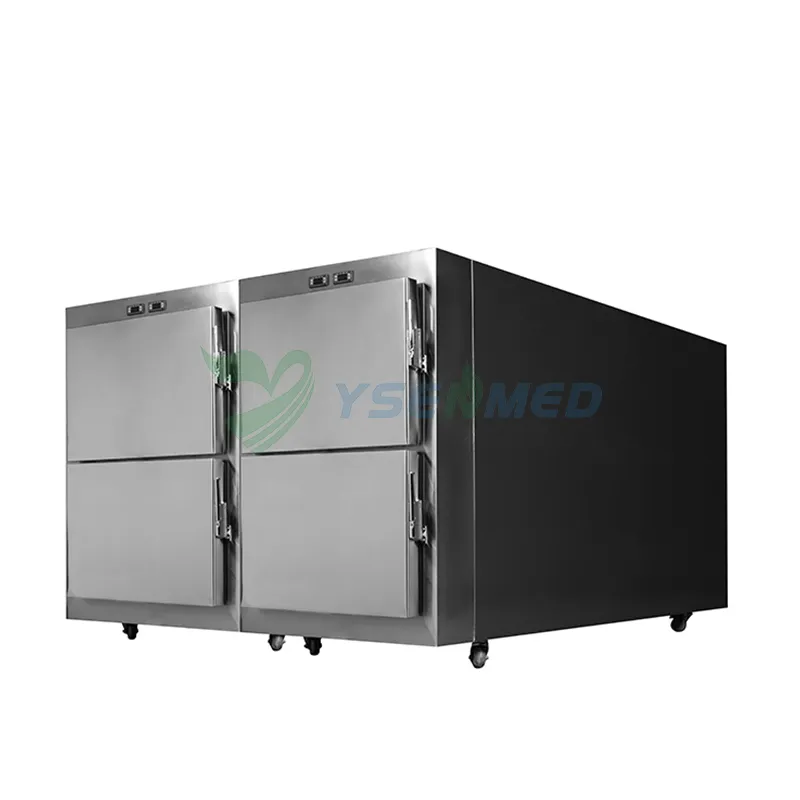
Facilities in hospitals, funeral homes, forensic agencies, and cemeteries rely heavily on a dependable morgue fridge to preserve human remains with dignity and compliance. This essential morgue fridge maintains precise low temperatures that slow decomposition, prevent odors, and protect staff health. Consequently, managers who understand the available options make informed decisions that align with operational needs and budget constraints.
Why Understanding Different Types of Morgue Fridges Matters
Every facility faces unique demands. For example, small funeral homes handle lower volumes, whereas large hospitals manage surges from emergency departments. Therefore, selecting the right type of morgue fridges directly impacts daily workflow, regulatory adherence, and long-term costs.
Main Types of Morgue Fridges for Hospitals and Funeral Homes
1. Single-Body Morgue Fridge
Compact single body and multi-body morgue fridge options start with single-unit designs. These models suit small funeral homes or backup storage in larger facilities. Operators appreciate their minimal footprint—often under 1 square meter—while still offering full-size trays for adult remains.
Moreover, a hospital morgue fridge in single-body configuration fits easily into existing rooms without structural changes. Staff access the body quickly through a front-loading door, and this simplicity reduces training time.
2. Multi-Body Morgue Fridges (2 to 12 Bodies)
Larger facilities frequently choose multi-body units. Common configurations include 2, 3, 4, 6, 9, or 12 bodies arranged in tiers or side-by-side layouts. Each compartment operates independently, so temperature remains stable when staff open one door.
As a result, a funeral home morgue fridge with three or six bodies handles typical daily volumes efficiently. Hospitals, however, often select nine-body models to accommodate peak periods.
3. Side-Loading vs. End-Loading Designs
Professional morgue fridge manufacturers offer two primary loading styles. Side-loading units feature doors on the long side, which saves aisle space in narrow rooms. In contrast, end-loading models open from the shorter end, allowing easier maneuvering with gurneys.
Many managers prefer side-loading for space efficiency, yet end-loading proves ideal when facilities use standardized transfer equipment.
4. Bariatric Morgue Fridges
Standard trays support up to 200-250 kg, but bariatric models accommodate 300-500 kg. These reinforced medical morgue fridge units feature wider trays, stronger rollers, and heavy-duty compressors. Facilities that serve diverse populations invest in at least one bariatric unit to avoid handling challenges.
Differences Between Morgue Fridge and Morgue Freezer
Clients often confuse refrigeration and freezing options. A standard mortuary refrigerator maintains 2°C to 8°C for short-term preservation and viewings. Conversely, a morgue freezer operates at -10°C to -25°C for long-term forensic storage or disaster response.
Therefore, hospitals typically combine both: body storage refrigeration for routine cases and freezing capacity for extended retention. Understanding these differences between morgue fridge and morgue freezer prevents costly mismatches.
Key Features Across All Types of Morgue Fridges
Modern corpse preservation equipment incorporates several standard elements:
- 304 stainless steel interior and exterior for corrosion resistance
- High-density polyurethane insulation (80-120 mm)
- Digital temperature controllers with ±0.5°C accuracy
- Audible and visual alarms with battery backup
- Telescopic or roller trays for smooth transfer
- Self-closing doors with magnetic gaskets
- Eco-friendly R404a or R290 refrigerant
These features ensure reliable performance across single-body and multi-body models.
How to Choose a Morgue Fridge for Medical Facilities
Managers follow a clear process. First, calculate average and peak storage needs. Next, measure available space including doorways and turning radii. Then, verify temperature requirements match protocols—most choose 2-6°C for post-mortem storage system use.
Additionally, review energy consumption data. Premium units from manufacturers like Ysenmedmortuary consume 30-50% less electricity than budget alternatives.
Comparison Table: Popular Types of Morgue Fridges
| Type | Capacity | Footprint (approx.) | Loading Style | Best For |
|---|---|---|---|---|
| Single-Body | 1 body | 0.8 x 2.2 m | End or Side | Small funeral homes, backup |
| Two-Body | 2 bodies | 1.5 x 2.2 m | Side | Medium funeral homes |
| Three-Body | 3 bodies | 2.2 x 2.2 m | Side or End | Hospitals, large funeral homes |
| Six-Body (2 tiers x 3) | 6 bodies | 2.2 x 2.2 m | Side | Busy hospitals, forensic centers |
| Nine-Body (3 tiers x 3) | 9 bodies | 2.2 x 2.2 m | Side | Major medical centers |
| Bariatric Single-Body | 1 large body | 1.0 x 2.4 m | End | All facilities needing oversized |
This table helps buyers quickly compare types of morgue fridges for hospitals and funeral homes.
Material and Construction Considerations
Top suppliers, including Ysenmedmortuary, use 304 or 316-grade stainless steel throughout. Interior corners feature seamless coved design for easy cleaning. Furthermore, exterior panels receive powder coating or brushed finish to resist scratches in high-traffic areas.
Energy Efficiency and Operating Costs
Facilities increasingly prioritize green solutions. Inverter compressors adjust speed according to load, which reduces power use by up to 40%. LED interior lighting and improved door seals further lower bills. Consequently, managers recover premium pricing through savings within 3-5 years.
Noise Level and Placement Flexibility
Quiet operation matters when units sit near family areas. Leading morgue fridges produce less than 50 dB—comparable to a household refrigerator. Heavy-duty casters with brakes allow relocation without professional assistance.
Hygiene and Infection Control Features
Seamless interiors, removable trays, and drainage ports simplify sanitization. Some models include antimicrobial silver-ion coating and optional UV lamps. These elements prove essential in modern healthcare settings.
Manufacturer Selection and Support
Reputable brands like Ysenmedmortuary provide:
- CE, ISO 9001, and ISO 13485 certifications
- 2-5 year compressor warranties
- Global spare parts availability
- Installation and staff training
- 24/7 technical support
Buyers who choose established suppliers avoid downtime and hidden costs.
Customization Options
Many facilities request tailored solutions. Manufacturers modify tray sizes, add extra alarms, or integrate remote monitoring. Custom colors or branding help funeral homes maintain aesthetic consistency.
Disaster and Surge Capacity Planning
Portable or modular units expand capacity quickly during crises. Some designs stack or connect side-by-side, and this scalability proved vital in recent public health events.
Maintenance Requirements Across Types
All morgue fridges need regular care. Staff clean interiors weekly, check door gaskets monthly, and schedule professional servicing every 6-12 months. Multi-body units require slightly more attention to individual compartment seals.
Long-Term Value Assessment
Initial purchase represents only part of the equation. Quality professional morgue fridge models last 15-20 years with proper maintenance. In contrast, low-cost imports often fail within 5-7 years. Therefore, total cost of ownership favors trusted brands.
Frequently Asked Questions About Types of Morgue Fridges
Q: What are the main types of morgue fridges for hospitals and funeral homes? A: Facilities choose from single-body, multi-body (2-12), side-loading, end-loading, and bariatric models depending on volume and space.
Q: How does a morgue fridge for funeral homes differ from hospital models? A: Funeral homes often prefer 2-4 body units with aesthetic finishes, while hospitals select larger 6-9 body configurations for higher throughput.
Q: What is the difference between a morgue fridge and morgue freezer? A: Morgue fridges maintain 2-8°C for short-term preservation and viewings; freezers operate at -10°C to -25°C for long-term storage.
Q: Can I use a single body and multi-body morgue fridge in the same facility? A: Yes—many hospitals combine compact single units for overflow with larger multi-body systems for primary storage.
Q: How do I choose a morgue fridge for medical facilities? A: Assess capacity needs, measure space, verify temperature precision, check energy ratings, and select a certified manufacturer like Ysenmedmortuary.
Q: Are bariatric morgue fridges necessary? A: Facilities serving diverse populations benefit greatly from at least one oversized unit to handle all cases safely.
Q: What temperature should a standard morgue fridge maintain? A: Most protocols require 2°C to 6°C for optimal short-term preservation.
Final Thoughts: Select the Right Morgue Fridge for Your Needs
Understanding types of morgue fridges for hospitals and funeral homes empowers managers to invest wisely. The ideal solution balances capacity, features, reliability, and cost while meeting regulatory standards.
Ready to explore options? Contact Ysenmedmortuary today for expert guidance on hospital morgue fridge, funeral home morgue fridge, and complete body storage refrigeration systems. Our team helps facilities worldwide select and implement the perfect post-mortem storage system tailored to unique requirements.