


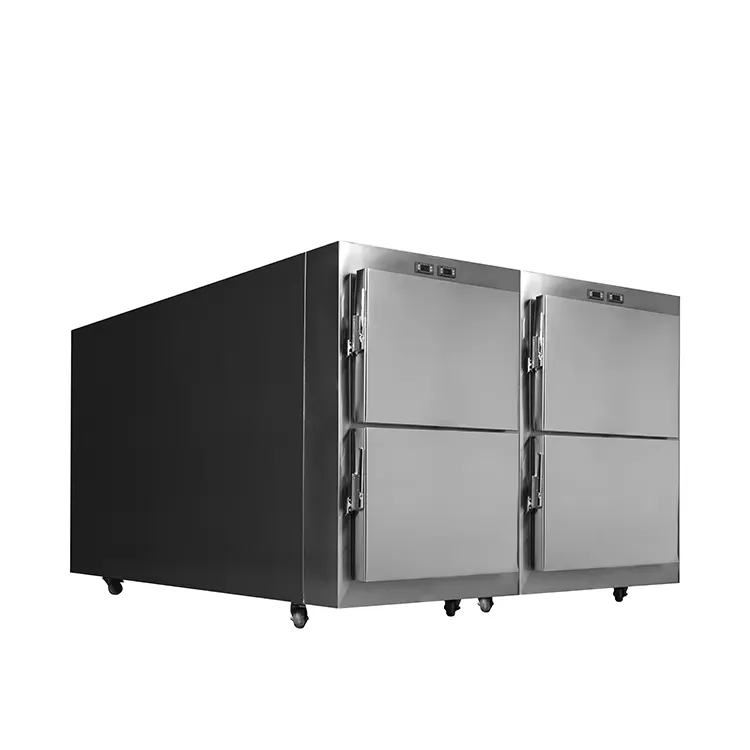
Forensic investigations demand flawless evidence preservation from the moment authorities recover remains until experts complete examinations. Moreover, high-precision equipment maintains body integrity and supports accurate chain-of-custody documentation across hospitals, funeral homes, forensic agencies, and cemeteries. Consequently, facilities that invest in advanced solutions reduce risks of degradation and strengthen legal outcomes. Furthermore, rising case complexity and stricter regulatory expectations drive professionals to seek systems that combine reliable cooling with smart monitoring. As a result, decision-makers gain confidence that stored remains remain suitable for DNA analysis, autopsies, and identification processes. Additionally, modern facilities prioritize equipment that aligns with evolving forensic protocols while supporting daily operational efficiency.
The Critical Role of Precision in Forensic Body Storage
Professionals handle sensitive cases daily where even minor temperature fluctuations compromise evidence. Therefore, facilities turn to specialized solutions that exceed basic refrigeration. For instance, forensic teams require consistent conditions that slow decomposition without altering tissues needed for toxicology or histology. Moreover, cemeteries and funeral homes benefit from equipment that supports temporary holding while maintaining dignity and hygiene. As a result, high-precision systems help everyone involved meet ethical and legal standards.
What Is Digital Forensic Lab Body Storage Equipment?
Purchasers seek reliable Digital forensic lab body storage equipment that delivers precise temperature control, digital monitoring, and secure access features tailored for forensic investigations in demanding environments. Manufacturers design these units with robust construction and user-friendly interfaces that simplify daily workflows. Furthermore, operators appreciate how these systems log every access and temperature change automatically. In practice, forensic agencies report fewer incidents after upgrading to such advanced technology. Moreover, the equipment scales effectively for facilities ranging from small hospital mortuaries to large dedicated labs.
Key Features of Forensic Cold Storage Equipment and Forensic Morgue Storage Equipment
Forensic cold storage equipment stands out through its advanced temperature regulation and alarm systems that alert staff instantly to any deviations. Additionally, forensic morgue storage equipment incorporates stainless steel interiors that resist corrosion and simplify thorough cleaning. Therefore, teams maintain hygienic conditions effortlessly. Furthermore, adjustable trays and roll-in racks accommodate various body sizes while reducing physical strain during transfers.
Mortuary Refrigeration System and Morgue Freezer Units in Forensic Settings
A well-engineered mortuary refrigeration system forms the foundation of evidence preservation. It maintains stable environments even during power interruptions thanks to backup generators and redundant cooling circuits. Moreover, morgue freezer units provide negative-temperature options ideal for long-term holds in unidentified cases or extended investigations. As a result, decomposition slows dramatically and forensic experts receive intact samples for analysis.
Cadaver Storage Solutions and Body Preservation Systems
Facilities implement cadaver storage solutions that prioritize both safety and traceability. For example, body preservation systems use forced-air circulation to ensure uniform temperatures throughout the chamber. Consequently, hot spots never develop and evidence integrity remains intact. Additionally, integrated sensors feed data directly to central dashboards for real-time oversight.
Digital Forensic Lab Body Storage Systems and Modern Forensic Lab Storage Equipment
Digital forensic lab body storage systems integrate seamlessly with existing infrastructure and support remote monitoring via secure apps. Furthermore, modern forensic lab storage equipment includes predictive maintenance alerts that notify technicians before issues arise. Therefore, downtime decreases and facilities operate more smoothly.
Forensic Body Storage Equipment for Digital Labs and Digital Forensic Body Preservation Equipment
Forensic body storage equipment for digital labs combines physical reliability with software intelligence that logs every interaction. Additionally, digital forensic body preservation equipment employs RFID or barcode tracking to eliminate identification errors. As a result, teams strengthen chain-of-custody documentation and prepare defensible records for court proceedings.
Digital Forensic Lab Body Storage Equipment Standards 2026
Industry professionals reference digital forensic lab body storage equipment standards 2026 that emphasize enhanced data logging, biosafety compliance, and energy-efficient designs. Moreover, updated guidelines highlight the need for antimicrobial surfaces and automated audit trails. Consequently, manufacturers align products with these expectations to help facilities achieve accreditation.
Essential Body Storage Equipment for Modern Forensic Labs
Facilities evaluate essential body storage equipment for modern forensic labs by focusing on capacity, temperature precision, and integration capabilities. For instance, walk-in coolers maximize space while modular units offer flexibility for growing caseloads. Furthermore, high-density insulation reduces energy consumption and supports sustainable operations.
Best Body Storage Solutions for Digital Forensic Laboratories
Experts recommend best body storage solutions for digital forensic laboratories that feature IoT connectivity and customizable alert thresholds. Additionally, these solutions support multi-user access controls that limit entry to authorized personnel only. Therefore, security improves and evidence tampering risks drop significantly.
Advanced Digital Forensic Lab Body Storage Systems for Hospitals
Hospitals benefit greatly from advanced digital forensic lab body storage systems for hospitals that combine short-term positive-temperature storage with rapid-access doors. Moreover, these systems interface with hospital networks to streamline transfers between emergency departments and pathology labs. As a result, response times shorten and patient care workflows remain uninterrupted.
How to Choose Forensic Body Storage Equipment for Labs
Teams often ask how to choose forensic body storage equipment for labs. First, they assess current and projected case volumes to determine required capacity. Next, they verify compatibility with existing laboratory information management systems. Furthermore, decision-makers review manufacturer experience in forensic applications and request detailed references. Consequently, well-informed selections lead to long-term reliability and compliance.
Selecting a Manufacturer for Digital Forensic Lab Body Storage Equipment
Choosing the right manufacturer requires thorough evaluation of technical expertise and ongoing support. Clients examine product certifications, warranty coverage, and training programs offered. Additionally, they test equipment compatibility with facility layouts and backup power systems. Moreover, reputable providers demonstrate deep understanding of forensic requirements and deliver customization options. As a result, facilities secure equipment that performs consistently under demanding conditions.
Leading specialists like Ysenmedmortuary stand out by focusing on innovation and client-specific needs. Their solutions support hospitals, forensic agencies, funeral homes, and cemeteries with durable, high-precision technology designed for evidence preservation.
Practical Considerations for Purchase and Use Across Facilities
Hospitals prioritize rapid access and easy-clean surfaces that handle high turnover. Forensic agencies emphasize extended holding capabilities and robust tracking for legal cases. Furthermore, funeral homes focus on quiet operation and aesthetic integration near viewing areas. Cemeteries consider weather-resistant units for temporary outdoor storage. Therefore, each facility tailors decisions to its unique workflow and regulatory environment.
During purchase, teams evaluate spare parts availability and staff training resources. Additionally, they conduct on-site trials of alarm systems and data-logging features. As a result, potential issues surface early and implementation proceeds smoothly. In daily use, regular calibration and software updates keep systems performing at peak levels. Moreover, clear protocols guide staff to maximize safety and efficiency.
Implementation Best Practices for High-Precision Systems
Successful implementation begins with a comprehensive needs assessment that maps current processes. Next, cross-functional teams collaborate on installation timelines. Furthermore, pilot testing identifies minor adjustments before full rollout. Consequently, facilities experience minimal disruption and realize benefits quickly.
Ongoing support includes technical assistance and periodic performance reviews. Additionally, staff participate in refresher training to stay current with new features. Therefore, systems remain compliant and reliable for years.
| Facility Type | Primary Focus | Recommended Features | Expected Outcomes |
|---|---|---|---|
| Hospitals | High turnover and quick access | Rapid-open doors, positive-temperature control, easy-clean surfaces | Faster workflows and reduced errors |
| Forensic Agencies | Long-term evidence integrity | Negative-temperature options, RFID tracking, detailed logging | Stronger chain-of-custody and court-ready records |
| Funeral Homes | Quiet, dignified operation | Low-noise compressors, aesthetic design, adjustable compartments | Enhanced client experience and efficiency |
| Cemeteries | Temporary holding in varied conditions | Weather-resistant construction, backup power | Reliable performance during emergencies |
This table highlights key considerations that guide purchasing decisions and aligns features with real-world facility needs. Moreover, teams use it as a practical checklist when comparing options.
Forensic Cold Storage Equipment in Real-World Investigations
Forensic teams rely on forensic cold storage equipment to preserve remains during complex cases that span months. Additionally, body preservation systems maintain tissue quality for advanced testing methods. As a result, investigators obtain accurate results that support justice.
Conclusion
Facilities that adopt high-precision body storage solutions position themselves for success in modern forensic work. They move beyond traditional cooling to create secure, traceable environments that protect evidence and support professionals. Furthermore, forward-thinking providers like Ysenmedmortuary continue to innovate and deliver tailored support. Therefore, decision-makers who choose wisely today secure reliable performance and compliance for tomorrow. Explore advanced options at Ysenmedmortuary to discover how these technologies can elevate your forensic operations.
FAQ
What are digital forensic lab body storage equipment standards 2026? Digital forensic lab body storage equipment standards 2026 emphasize enhanced digital logging, antimicrobial materials, and redundant cooling systems. Moreover, they require seamless integration with laboratory management platforms to maintain evidence integrity.
How to choose forensic body storage equipment for labs? Begin by assessing capacity needs and temperature requirements specific to your caseload. Additionally, verify manufacturer experience and request compatibility testing with existing systems. Consequently, you select equipment that delivers long-term reliability.
What makes essential body storage equipment for modern forensic labs effective? Essential body storage equipment for modern forensic labs includes precise sensors, automated alerts, and secure tracking. Furthermore, these features reduce manual errors and support compliance with current forensic protocols.
Are best body storage solutions for digital forensic laboratories worth implementing? Yes, best body storage solutions for digital forensic laboratories provide real-time monitoring and predictive maintenance. As a result, facilities experience fewer incidents and stronger evidence preservation.
Why do hospitals prefer advanced digital forensic lab body storage systems for hospitals? Hospitals prefer advanced digital forensic lab body storage systems for hospitals because they offer rapid access, consistent temperatures, and easy integration with hospital networks. Therefore, staff maintain efficient workflows without compromising evidence quality.
How do mortuary refrigeration system and cadaver storage solutions support forensic investigations? Mortuary refrigeration system and cadaver storage solutions maintain stable conditions that slow decomposition while preserving DNA and tissue samples. Moreover, they include detailed logging that strengthens chain-of-custody documentation for legal proceedings.