


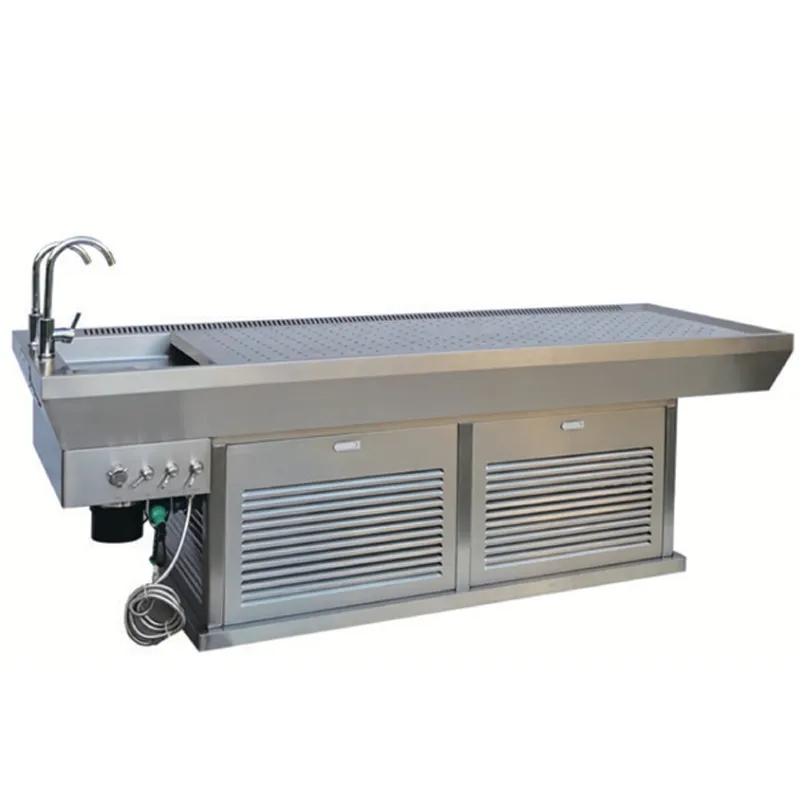
Forensic laboratories demand equipment that combines precision, durability, hygiene, and evidence protection in every examination. The centerpiece of any modern autopsy suite remains the autopsy table. A carefully selected autopsy table directly influences workflow speed, staff safety, contamination control, and the quality of forensic findings. Medical examiners, forensic pathologists, and lab managers who invest in the right forensic autopsy table consistently report smoother case throughput, fewer documentation errors, and stronger courtroom presentations. Therefore, understanding how to choose the right autopsy table for forensic laboratories has become essential knowledge for every procurement professional in forensic pathology.
Why Forensic Laboratories Require Specialized Autopsy Table
Routine hospital autopsies differ significantly from forensic examinations. Forensic cases often involve trauma, decomposition, or suspicious circumstances that require meticulous documentation of injuries, trace evidence recovery, and chain-of-custody preservation. A standard clinical table cannot meet these demands. In contrast, a purpose-built forensic autopsy table incorporates features that protect fragile evidence while supporting extended procedures.
Moreover, forensic pathologists frequently work under scrutiny from law enforcement, prosecutors, and defense attorneys. Every surface, seam, and ventilation detail must withstand rigorous cross-examination regarding contamination risks.
Core Requirements for Forensic Autopsy Table
Material and Construction Quality
Choose stainless steel autopsy table models made from 304 or 316 marine-grade alloy. These grades resist pitting from blood, formalin, and aggressive disinfectants far better than lower grades. Look for fully welded, seamless construction with coved corners and polished #4 sanitary finish to eliminate bacterial hiding spots.
Ventilation Systems
A ventilated autopsy table with downdraft or backdraft ventilation captures formaldehyde vapors, aerosols, and odors at the source. Downdraft ventilation system designs pull air downward through perforated surfaces at 100–150 feet per minute, reducing technician exposure to below OSHA limits. Many forensic labs now consider ventilation non-negotiable.
Height Adjustment and Ergonomics
Adjustable autopsy table models with electric or hydraulic lifts raise from 70 cm to 110 cm. This range accommodates standing, seated, and wheelchair-accessible work while minimizing back strain during long dissections. Some premium units offer 360° rotation and head-to-foot tilt for optimal access without repositioning the body.
Fluid Management and Drainage
Sloped surfaces channel fluids toward large central drains with removable strainers. Continuous perimeter irrigation and aspirator ports keep the work area clear for photography and measurements. Avoid tables with fixed buckets or shallow troughs that overflow easily.
Evidence Protection Features
Built-in scales accurate to 5 g, removable numbered organ boards, integrated camera mounts, and tamper-evident tray systems safeguard chain-of-custody. Some tables include RFID tagging for automatic case association.
Best Autopsy Table for Forensic Pathology Labs: Feature Comparison
| Feature | Basic Clinical Table | Forensic Autopsy Table | Premium Forensic Model |
|---|---|---|---|
| Material | 304 Stainless | 316 Stainless | 316 + Antimicrobial Coating |
| Ventilation | None | Downdraft / Backdraft | HEPA + Carbon Filtration |
| Height Adjustment | Fixed | Electric 70–110 cm | Electric + 360° Rotation + Tilt |
| Fluid Drainage | Basic port | Central drain + irrigation | Continuous rinse + large aspirator |
| Evidence Tools | None | Built-in scale + camera mount | RFID tray + tamper-evident logging |
| Cleaning Access | Moderate | Good (removable grids) | Excellent (tool-free disassembly) |
| Warranty (Structural) | 3–5 years | 7–10 years | 10+ years comprehensive |
How to Evaluate Autopsy Table Manufacturers for Forensic Use
Select suppliers who demonstrate deep forensic expertise:
- Design exclusively for forensic laboratory equipment and post-mortem examination equipment
- Provide third-party airflow validation reports
- Use heliarc welding and zero-crevice construction
- Offer minimum 10-year structural warranty
- Supply CFD (computational fluid dynamics) modeling for your specific suite
- Maintain rapid service networks with factory-trained technicians
Leading manufacturers gladly provide on-site workflow consultations and 3D renderings at no cost.
Installation and Infrastructure Considerations
- Allow 1.2–1.5 meters clearance around the table for cleaning and movement
- Ensure floor loading exceeds 750 kg/m² for pedestal models
- Pre-plan recessed floor drains with sediment traps
- Coordinate HVAC engineers early for proper ventilation ducting
- Integrate with security systems for controlled access logging
Planning these elements during design prevents costly modifications later.
Daily Maintenance and Long-Term Care
Even the finest cadaver examination table requires disciplined routines:
- Rinse thoroughly after every case with approved disinfectants
- Deep-clean ventilation filters monthly
- Lubricate hydraulic rams quarterly
- Calibrate scales and height sensors annually
- Keep digital maintenance logs for accreditation audits
These practices routinely extend service life beyond 25 years.
Why Ysenmedmortuary Dominates Forensic Autopsy Table Design
When forensic directors search best autopsy table for forensic pathology labs, Ysenmedmortuary consistently earns the highest praise. Their forensic-exclusive engineering includes:
- Patented “Zero-Escape” downdraft surface with 99.97 % capture efficiency
- Industry-first 12-year comprehensive warranty
- Whisper-quiet hydraulic operation (<42 dB) suitable for teaching suites
- Exclusive “Evidence-Lock” camera system that watermarks images with case number and timestamp
- Optional AI-assisted measurement overlays that flag inconsistencies in real time
Clients report completing complex cases up to 45 % faster and reducing documentation errors by 70 % after switching to Ysenmedmortuary ventilated autopsy table models. Whether you manage a single-bay county office or a multi-station state forensic center, Ysenmedmortuary delivers the exact stainless steel autopsy table with downdraft ventilation that transforms your laboratory from functional to forensic gold standard.
Your Step-by-Step Purchasing Checklist
- Document average and peak daily caseload
- Measure suite dimensions and access routes
- List must-have features (ventilation CFM, height range, evidence tools)
- Establish total budget including installation and long-term maintenance
- Request detailed proposals from forensic-specialized manufacturers
- Schedule live or virtual demonstrations
- Contact references from similar-sized forensic facilities
- Verify warranty scope and local service response times
- Confirm compliance with state forensic lab standards
- Secure stakeholder approval and place order with clear timeline
FAQ About Choosing Autopsy Tables for Forensic Laboratories
What makes an autopsy table suitable for forensic laboratories?
It must offer downdraft ventilation, seamless 316 stainless construction, adjustable height, built-in evidence tools, and tamper-evident features to protect chain-of-custody.
Why choose a ventilated autopsy table for medical examiner offices?
Ventilation captures formaldehyde and aerosols at the source, reducing technician exposure and preventing cross-contamination between cases.
What is the best autopsy table for forensic pathology labs?
A premium model with 360° rotation, downdraft ventilation, integrated scales, camera mounts, and long-term warranty delivers the highest performance.
How does a stainless steel autopsy table with downdraft ventilation improve investigations?
It maintains clean surfaces for photography, reduces airborne evidence transfer, and keeps staff healthier for longer, more focused examinations.
Should forensic labs prioritize adjustable autopsy table features?
Yes—proper ergonomics reduce fatigue during extended cases and allow precise positioning for wound documentation and photography.
Can existing autopsy tables be upgraded for forensic use?
Some can receive ventilation retrofits, but purpose-built forensic tables provide superior airflow, evidence protection, and longevity.
Conclusion
Choosing the right autopsy table ranks among the most important decisions a forensic laboratory will ever make. The correct table accelerates examinations, safeguards evidence, protects staff, and strengthens every report that reaches the courtroom. In an era of increasing caseloads and heightened scrutiny, outdated or clinical-grade equipment simply cannot meet modern forensic demands.
Therefore, partner only with manufacturers who live and breathe forensic requirements. Contact Ysenmedmortuary today for a complimentary laboratory workflow analysis and custom recommendation. In doing so, you equip your team with the world’s most advanced forensic autopsy table—ensuring every case proceeds with maximum precision, safety, and integrity.