


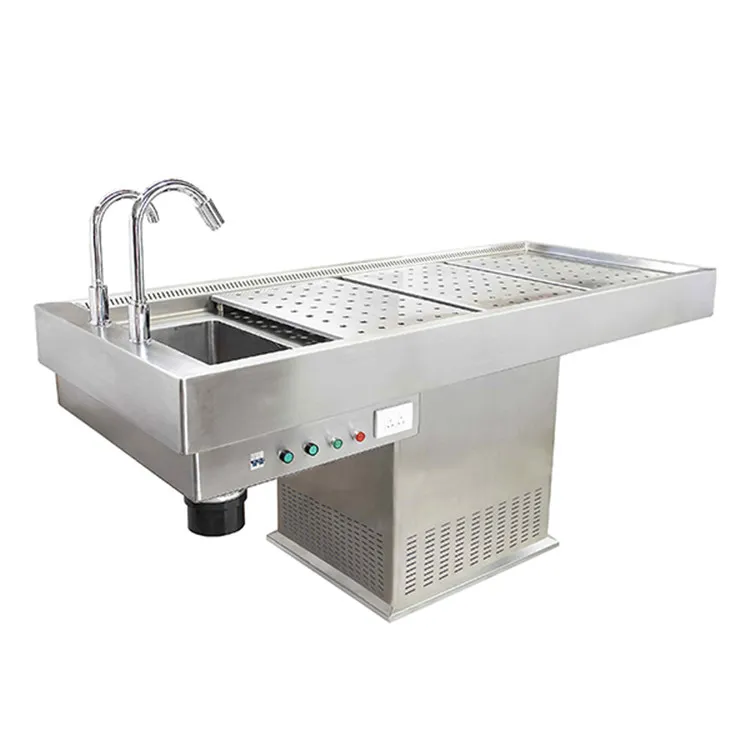
Forensic laboratories and medical facilities handle critical responsibilities that require precise, durable, and hygienic equipment. As a purchasing client for a mortuary, funeral home, forensic agency, or hospital mortuary, you should understand how to select an Autopsy Table manufacturer and what considerations hospitals, cemeteries, funeral homes, and forensic agencies should take into account during purchase and use. This article discusses the industry’s autopsy table solutions for modern forensic laboratories and provides practical guidance for making informed decisions.
Moreover, modern forensic work demands equipment that supports accuracy, safety, and efficiency. Therefore, facilities increasingly seek advanced solutions that integrate seamlessly into high-standard environments. Additionally, proper selection helps maintain professional standards while protecting staff health during sensitive procedures.
The Role of Autopsy Table in Contemporary Forensic Practice
Forensic laboratories rely heavily on specialized furniture to conduct thorough examinations. An effective forensic autopsy table creates a controlled workspace that facilitates detailed post-mortem analysis while upholding strict hygiene protocols.
Furthermore, these tables support pathologists and technicians by providing stable surfaces and integrated drainage systems. In addition, they contribute to overall laboratory workflow by minimizing cross-contamination risks. Transitioning to modern designs therefore improves both procedural quality and staff comfort during long sessions.
Exploring Different Types of Autopsy Tables
Professionals evaluate various configurations to match their specific operational needs. For example, stainless steel autopsy table models dominate the market because they offer exceptional durability and resistance to corrosion.
Moreover, pathology autopsy table designs focus on features that enhance tissue examination and sample collection. Additionally, hydraulic autopsy table systems provide height adjustment capabilities that reduce physical strain on examiners. In contrast, fixed models suit facilities with more standardized procedures.
Furthermore, modern autopsy table system configurations often incorporate advanced ventilation and integrated lighting. These innovations help maintain a cleaner environment and improve visibility during detailed work.
How to Choose an Autopsy Table for Forensic Laboratories
How to choose an autopsy table for forensic laboratories requires careful assessment of multiple factors. First, facilities review their average caseload and types of procedures performed. They therefore consider table size, weight capacity, and material quality early in the decision process.
Additionally, evaluate technical features such as adjustability, drainage efficiency, and ease of cleaning. Best autopsy table for forensic pathology labs typically includes smooth surfaces and removable components that support thorough sanitation. Moreover, compatibility with existing forensic laboratory equipment remains essential for seamless integration.
Ysenmedmortuary experts guide clients through this evaluation. They recommend solutions based on real workflow patterns and future expansion plans.
Key Considerations for Purchase and Daily Use
Hospitals, cemeteries, funeral homes, and forensic agencies share several important priorities during procurement. Durability stands out because autopsy tables endure frequent intensive use. Furthermore, safety features like non-slip surfaces and secure locking mechanisms protect both staff and equipment.
Stainless steel autopsy table for hospitals and morgues offers particular advantages due to its hygienic properties and long service life. Additionally, facilities must consider space constraints and power requirements for adjustable models.
In addition, ergonomic design significantly impacts daily operations. Hydraulic autopsy table systems for post mortem examination reduce physical demands and help prevent workplace injuries. Transitioning to these systems therefore supports staff well-being while maintaining high productivity levels.
Product Introduction from Ysenmedmortuary
Ysenmedmortuary delivers high-quality Autopsy Table solutions specifically engineered for modern forensic laboratories. These advanced systems combine robust construction with thoughtful features to meet the demanding requirements of pathology professionals.
For instance, the modern autopsy table system configurations support efficient workflows while upholding the highest standards of hygiene and functionality. Facilities appreciate the attention to detail that enhances both performance and longevity.
Advanced Features of Modern Forensic Autopsy Tables
Contemporary post-mortem examination table designs incorporate numerous beneficial elements. Integrated sink areas with continuous water flow simplify cleaning during procedures. Moreover, powerful ventilation systems effectively remove odors and airborne particles.
Additionally, LED lighting arrays provide shadow-free illumination that improves examination accuracy. Cadaver handling system integration allows smoother transfers and reduces manual lifting requirements. Furthermore, digital control panels on hydraulic models offer precise positioning with minimal effort.
Pathology lab workstation compatibility enhances overall laboratory efficiency. Many tables now include built-in power outlets and instrument trays that keep essential tools within easy reach. In contrast, older designs often lack these practical conveniences.
Maintenance Best Practices for Long-Term Performance
Proper maintenance extends equipment service life significantly. Facilities therefore establish regular cleaning protocols using laboratory-approved disinfectants. Additionally, technicians inspect moving parts and seals during routine service visits.
Moreover, staff training plays a crucial role. Educated teams handle equipment correctly and identify potential issues early. Ysenmedmortuary provides comprehensive support resources that help laboratories develop effective maintenance programs.
Furthermore, preventive care reduces unexpected downtime. Facilities that document maintenance activities also strengthen their compliance position during inspections.
Capacity and Feature Comparison Tables
The following tables summarize typical options to support your decision-making process.
Autopsy Table Types Comparison
| Table Type | Key Features | Best Suited For | Main Advantage |
|---|---|---|---|
| Standard Fixed | Basic drainage, stainless surface | Small morgues | Simple and cost-effective |
| Hydraulic Adjustable | Height control, tilt options | Active forensic labs | Enhanced ergonomics |
| Ventilated High-End | Integrated exhaust system | High-volume pathology centers | Superior air quality |
| Mobile Multi-Function | Wheels, modular attachments | Flexible laboratory spaces | Easy repositioning |
Feature Overview Table
| Feature | Standard Models | Advanced Models | Benefit for Forensic Work |
|---|---|---|---|
| Material | Stainless steel autopsy table | Reinforced premium alloys | Corrosion resistance |
| Adjustability | Fixed or manual | Hydraulic autopsy table | Staff comfort |
| Ventilation | Basic | Integrated high-flow system | Odor and particle control |
| Cleaning Design | Smooth surfaces | Fully removable components | Rapid sanitation |
These comparisons help visualize important differences clearly. Moreover, always request detailed specifications from manufacturers to ensure perfect alignment with your laboratory requirements.
Industry Trends in Forensic Laboratory Equipment
The forensic sector continues to evolve toward smarter and more efficient solutions. Manufacturers focus increasingly on sustainable materials and energy-efficient components. Additionally, integration with digital documentation systems streamlines record-keeping during examinations.
Furthermore, mortuary equipment providers like Ysenmedmortuary incorporate feedback from practicing pathologists to refine designs. As a result, modern tables better address real-world challenges in busy laboratories.
In addition, emphasis on staff safety drives innovation in ergonomic features and contamination control. Facilities that adopt these advancements position themselves at the forefront of forensic medicine.
Why Partner with Experienced Manufacturers
Working with a knowledgeable manufacturer simplifies the entire procurement journey. They provide expert advice on autopsy table solutions for modern forensic laboratories and help avoid common selection mistakes. Moreover, strong technical support ensures smooth installation and ongoing performance.
Facilities that choose quality solutions report improved workflow efficiency and higher professional satisfaction. Transitioning to superior forensic autopsy table equipment therefore strengthens overall laboratory capabilities.
Additional Benefits of Quality Autopsy Table
Beyond basic functionality, well-designed tables contribute to a professional laboratory atmosphere. They support accurate findings and help maintain chain of custody standards in forensic cases. Additionally, durable construction minimizes replacement frequency and reduces long-term operational disruptions.
Morgue equipment that meets modern standards also supports training programs for new technicians. Clear, accessible designs accelerate learning curves and promote consistent technique application across teams.
FAQ Section
What makes a quality autopsy table essential for modern forensic laboratories? Quality tables provide stable, hygienic workspaces that support accurate examinations while protecting staff health and maintaining evidence integrity.
How do I determine the best autopsy table for forensic pathology labs? Assess your caseload, available space, and specific procedural needs. Consider adjustability, ventilation, and material durability carefully.
What advantages does a stainless steel autopsy table for hospitals and morgues offer? Stainless steel delivers superior corrosion resistance, easy cleaning, and long-term durability in demanding environments.
How important are hydraulic features in autopsy tables? Hydraulic systems significantly improve ergonomics by allowing height and tilt adjustments that reduce physical strain during procedures.
What should I look for when learning how to choose an autopsy table for forensic laboratories? Focus on material quality, safety features, ventilation effectiveness, and compatibility with your existing laboratory setup.
Do modern autopsy table systems support digital integration? Many advanced models include features that facilitate documentation and integration with laboratory information systems.
How do I maintain a pathology autopsy table for optimal performance? Follow regular cleaning protocols, inspect mechanical components periodically, and schedule professional servicing as recommended.
Are cadaver handling system features available on standard autopsy tables? Yes, many models incorporate integrated handling aids that improve safety and efficiency during body transfers.
In conclusion, investing in proper Autopsy Table solutions strengthens the capabilities of modern forensic laboratories. By carefully evaluating manufacturers, features, and long-term needs, facilities achieve better operational outcomes and maintain the highest professional standards. Ysenmedmortuary stands ready as a trusted partner with reliable solutions designed specifically for forensic and pathology environments. Thoughtful selection of autopsy tables supports accurate work, staff safety, and overall laboratory excellence for years to come.