


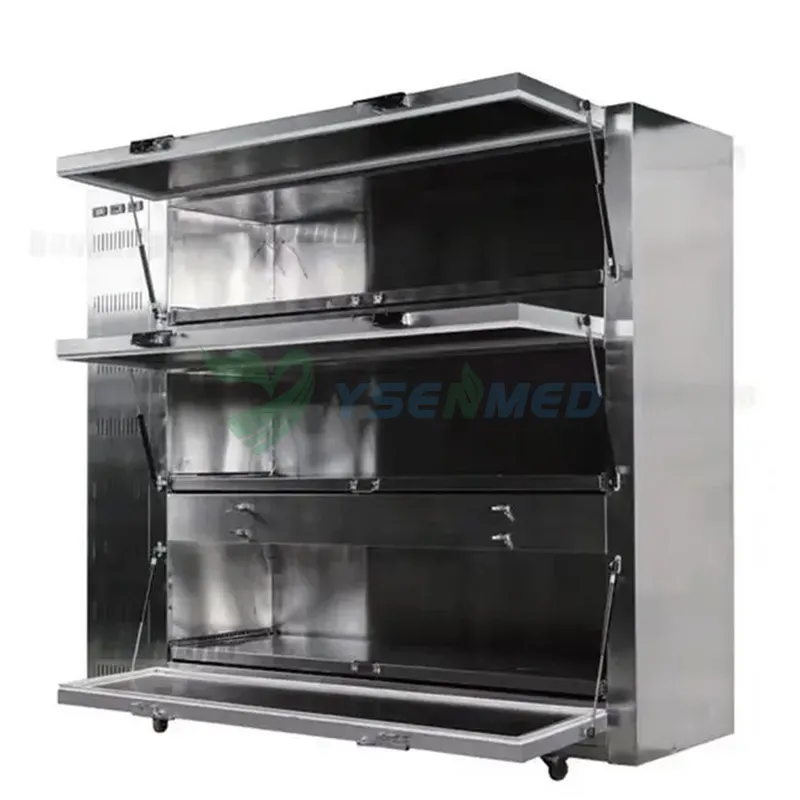
Hospitals, morgues, forensic agencies, and funeral homes require specialized cooling equipment to preserve deceased individuals with dignity and safety. Professionals frequently search for reliable dead body freezer solutions that meet strict medical and regulatory standards. A well-chosen dead body freezer maintains precise low temperatures, prevents decomposition, and supports chain-of-custody protocols when forensic examination becomes necessary. Facilities that select the appropriate type of dead body freezers experience smoother operations, better infection control, and higher compliance with current health guidelines. Therefore, understanding types of dead body freezers for hospitals and dead body freezer for morgues has become essential knowledge for every procurement decision in postmortem care.
Why Hospitals and Morgues Need Specialized Dead Body Freezer
Decomposition begins rapidly after death unless professionals intervene quickly. Hospitals manage sudden deaths in emergency departments, intensive care units, and general wards, while morgues handle cases from multiple sources. Mortuary freezer units must operate reliably 24/7 to preserve bodies for identification, family viewing, organ donation coordination, or medicolegal investigation. Moreover, modern units incorporate features that reduce cross-contamination risks and simplify cleaning routines.
Additionally, forensic agencies require temperature stability to protect evidence integrity. A corpse storage freezer that maintains uniform conditions across all trays helps pathologists obtain accurate histology results and reliable toxicology samples. Facilities that prioritize body preservation equipment report fewer disputes during legal proceedings and improved family satisfaction.
Main Types of Dead Body Freezers Available
Single-Body Dead Body Freezers
Single-body dead body freezers store one cadaver on a roll-in tray with its own dedicated refrigeration circuit. These units suit smaller hospitals or funeral homes with lower caseloads. Staff appreciate the discreet design that allows private access for family identification without disturbing other remains.
Furthermore, single-body models often feature compact footprints that fit through standard doorways. Technicians move trays easily, reducing manual lifting risks. Many hospital dead body freezer configurations in this category include digital temperature displays and audible alarms for immediate notification of excursions.
Multi-Body Dead Body Freezers
Multi-body dead body freezers accommodate 2 to 24 bodies, typically arranged in tiered trays. Large hospitals and regional morgues favor these professional dead body freezer systems because they maximize floor space efficiency. Side-loading or end-loading doors allow quick access during peak periods.
Moreover, centralized control panels monitor all compartments simultaneously. Forensic facilities particularly value models with individual tray logging that documents conditions for each case separately. This capability strengthens evidence admissibility in court.
Combination Refrigerator-Freezer Units
Some facilities choose hybrid morgue freezer designs that offer both positive (2°C to 8°C) and negative (-10°C to -20°C) temperature zones. Pathologists use refrigeration for short-term holds and freezing for extended storage or unidentified remains. These versatile units prove invaluable in teaching hospitals where research and routine autopsies coexist.
Additionally, combination models often include separate alarms for each zone, ensuring that a problem in one compartment does not affect the other. Hospitals that handle organ donation cases frequently select this type because it preserves tissues longer without freezing artifacts.
Walk-In Cold Rooms and Modular Systems
High-volume medical centers and central morgues install walk-in post-mortem storage systems with multiple racks. Technicians walk inside to retrieve bodies, benefiting from uniform cooling throughout the space. Modular designs allow facilities to add sections as caseloads grow.
Furthermore, walk-in units incorporate safety features such as internal emergency release handles and panic alarms. Forensic agencies appreciate the ability to isolate high-profile cases in dedicated zones within the same room.
Key Comparison of Dead Body Freezer Types
| Type | Typical Capacity | Best Suited For | Primary Advantages | Key Considerations |
|---|---|---|---|---|
| Single-Body | 1 body | Small hospitals, funeral homes | Discreet access, easy mobility | Limited surge capacity |
| Multi-Body (Tiered) | 2–24 bodies | Large hospitals, central morgues | Space efficiency, centralized monitoring | Higher cleaning complexity |
| Combination Ref/Freezer | 4–12 bodies | Teaching hospitals, pathology labs | Versatile temperature zones | Requires separate maintenance |
| Walk-In Cold Room | 20+ bodies | Regional forensic centers | Uniform cooling, easy staff access | Needs dedicated space and ventilation |
(This comparison draws from current industry standards and facility reports published 2023–2025.)
How to Choose a Dead Body Freezer for Medical Facilities
Purchasing managers must evaluate several factors before finalizing a selection. First, calculate average and peak daily caseloads over the past three years, then add a 30–40 % buffer for unexpected surges. Next, measure available space, including doorway widths and ceiling heights, to confirm compatibility.
Additionally, assess temperature requirements. Routine hospital use favors refrigeration, while forensic holds often demand freezing capability. Buyers should prioritize models with digital logging and remote monitoring to simplify audits.
Furthermore, consider infection control features. Seamless stainless interiors, removable trays, and antimicrobial surfaces reduce cleaning time and pathogen risks. Always request manufacturer documentation showing compliance with ISO 13485 medical device standards.
Differences Between Dead Body Freezer and Morgue Freezer
Many professionals use the terms interchangeably, yet subtle distinctions exist in practice. A dead body freezer typically refers to negative-temperature units designed for long-term preservation, while morgue freezer often describes the broader category that includes both refrigeration and freezing. Forensic facilities lean toward morgue dead body freezer systems with freezing capability to protect evidence over extended periods.
Moreover, medical dead body freezer models usually emphasize infection control and integration with hospital systems. Funeral homes might select simpler single body and multi-body dead body freezer configurations that prioritize quiet operation near family areas.
Maintenance and Usage Best Practices
Regular maintenance keeps any morgue freezer performing reliably. Staff should clean condenser coils every three months, inspect door seals monthly, and calibrate sensors annually. Additionally, technicians must verify backup battery function quarterly to ensure alarms work during power interruptions.
During daily use, operators load bodies evenly to maintain airflow and avoid overloading trays. They should also document every entry and exit to support chain-of-custody requirements in forensic cases.
Why Ysenmedmortuary Stands Out for Hospital and Morgue Applications
When procurement teams search how to choose a dead body freezer for medical facilities, Ysenmedmortuary consistently ranks among the most trusted names. Their units feature patented airflow designs that achieve exceptional temperature uniformity across all trays. Customers value the seamless stainless construction and tool-free tray removal that simplify deep cleaning.
Moreover, Ysenmedmortuary offers customizable configurations that combine refrigeration and freezing zones in one footprint. Forensic agencies appreciate individual tray monitoring with tamper-evident digital logs. Hospitals benefit from integration with building management systems and generator backups.
Facilities worldwide rely on Ysenmedmortuary for durable, compliant solutions that support both routine care and high-stakes investigations.
FAQ About Dead Body Freezer for Hospitals and Morgues
What are the main types of dead body freezers for hospitals?
Types of dead body freezers for hospitals include single-body, multi-body tiered, combination refrigeration-freezer, and walk-in systems, each matched to facility size and caseload.
What is the difference between dead body freezer and morgue freezer?
A dead body freezer typically emphasizes negative-temperature long-term storage, while morgue freezer covers both refrigeration and freezing options for general postmortem use.
How to choose a dead body freezer for medical facilities?
To how to choose a dead body freezer for medical facilities, calculate caseload, measure space, prioritize temperature precision, hygiene features, and manufacturer compliance with medical standards.
What is a single body and multi-body dead body freezer?
Single body and multi-body dead body freezer refers to units designed for one cadaver versus tiered systems holding multiple bodies, offering different space and workflow advantages.
Why do forensic agencies prefer certain dead body freezers?
Forensic teams select morgue dead body freezer models with freezing capability, individual monitoring, and tamper-evident logs to protect evidence integrity over extended periods.
Which dead body freezer suits small morgues best?
Small morgues usually choose single-body dead body freezers for their compact size, discreet access, and straightforward maintenance.