


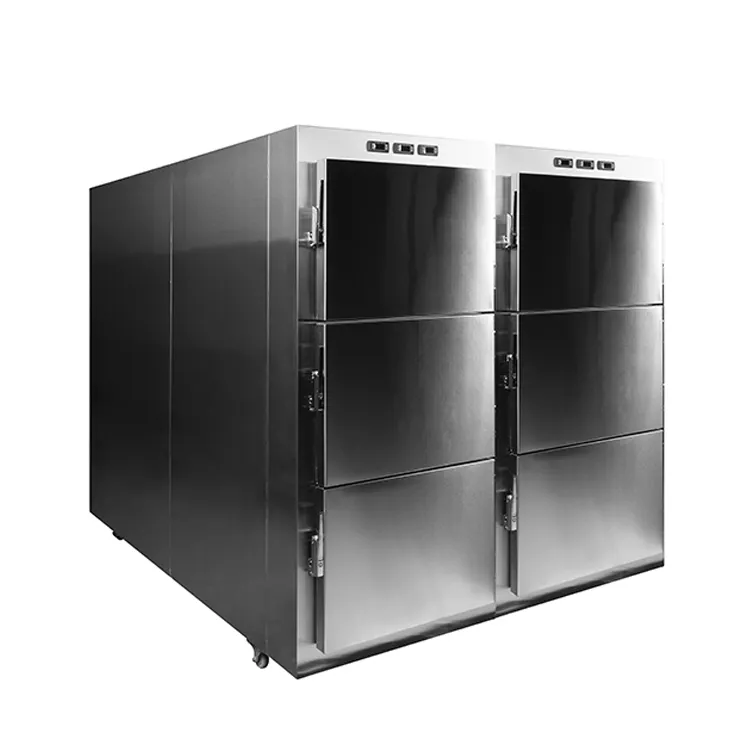
Selecting the right capacity is one of the most important decisions when purchasing a mortuary refrigerator. A unit that is too small creates operational pressure during peak periods, while a unit that is larger than necessary increases capital cost, energy use, and floor-space demand. Hospitals, clinics, medical centers, government healthcare projects, and medical equipment distributors across Africa regularly compare 2-body, 4-body, and 6-body models to find the best operational and budget fit.
This comparison guide explains the practical differences between these three common capacities, outlines typical applications, and provides selection criteria so buyers can match a mortuary refrigerator to realistic patient volume, available space, and local operating conditions.
¿Qué es un Mortuary Refrigerator?
A mortuary refrigerator is a specialized refrigeration unit designed for the controlled low-temperature storage of human remains. It is used in hospital mortuaries, forensic facilities, and medical centers to maintain bodies at stable temperatures, typically in the range of –10 °C to –25 °C or according to institutional protocols.
Unlike standard commercial refrigerators, these units feature stainless-steel interiors, individual or multi-body compartments, robust insulation, temperature monitoring, and safety features suited to continuous medical use. Capacity is usually expressed by the number of bodies the unit can hold (2-body, 4-body, 6-body, etc.).
Why Capacity Comparison Matters
Correct capacity planning protects both daily workflow and long-term costs. In many African hospitals, limited floor space, variable power supply, and constrained budgets make it essential to avoid both under-sizing and unnecessary over-capacity. Comparing 2-body, 4-body, and 6-body options side by side helps procurement teams make clearer decisions before requesting quotations.
Side-by-Side Capacity Comparison
| Capacidad | Aplicación típica | Approximate Footprint | Advantages | Ideal para |
|---|---|---|---|---|
| 2-Body | Small clinics, low-volume facilities | Compacto | Lower cost, small space requirement | Clinics, small district hospitals |
| 4-Body | Medium general hospitals | Medio | Balance of capacity and space | Regional and mid-size hospitals |
| 6-Body | Higher-volume hospitals | Larger | Better peak-handling capacity | Larger hospitals, referral centers |
These ranges are indicative. Actual external dimensions and internal layout vary by manufacturer and design (front-loading, side-loading, or tray systems).
2-Body Mortuary Refrigerator
A 2-body unit is the most compact option. It is commonly chosen by small clinics, private facilities, or low-volume district hospitals where daily body numbers are limited and floor space is restricted.
Advantages:
- Smaller capital outlay
- Minimal floor-space requirement
- Simpler installation and lower energy demand
Limitations:
- Limited ability to handle sudden peaks
- May require overflow arrangements during higher-volume periods
This capacity works well when average daily volume is consistently low and holding times are short.
4-Body Mortuary Refrigerator
The 4-body model is often the most versatile choice for mid-size hospitals. It provides enough capacity for normal operations while still fitting into moderate-sized mortuary rooms.
Advantages:
- Practical balance between capacity and footprint
- Better resilience during moderate peaks
- Widely requested by general and regional hospitals
Limitations:
- Higher cost and energy use than 2-body units
- Requires more floor space and stronger floor loading consideration
Many African mid-size hospitals find the 4-body configuration a practical default when historical volume data supports it.
6-Body Mortuary Refrigerator
A 6-body unit is designed for higher daily or peak volumes. It is typically selected by larger general hospitals, teaching hospitals, or referral centers that regularly manage more bodies or longer holding periods.
Advantages:
- Greater capacity for peak demand
- Reduced risk of overflow during busy periods
- Better long-term headroom if volume is expected to grow
Limitations:
- Higher purchase price and operating cost
- Larger footprint and higher power demand
- May be oversized for smaller facilities
This capacity is most appropriate when average and peak figures clearly justify the extra size.
How to Choose the Right Capacity
Use the following practical steps:
- Estimate volume
Collect or estimate average daily body numbers and typical peak figures. Factor in local mortality patterns and any seasonal or event-related increases. - Consider holding duration
Longer average holding times increase the number of bodies present at the same time and therefore raise required capacity. - Measure available space
Confirm doorway access, floor area, ceiling height, and ventilation clearance for the refrigeration unit. - Evaluate power conditions
In many parts of Africa, voltage stability and generator availability influence which size can operate reliably. Larger units draw more power and may need stronger electrical infrastructure. - Plan for growth
If patient volume or catchment area is expected to increase, a slightly larger capacity or a modular approach may reduce the need for early replacement. - Balance budget and risk
Under-sizing creates operational risk; over-sizing increases capital and energy cost. Aim for realistic peak coverage plus a modest contingency margin.
Additional Features to Evaluate Across All Capacities
Regardless of whether you choose a 2-body, 4-body, or 6-body mortuary refrigerator, the following points remain important:
- Temperature stability and recovery after door openings
- Construction quality and ease of cleaning
- Door design, locks, and emergency release
- Digital temperature display and high/low alarms
- Compatibility with local voltage and frequency
- Availability of spare parts and basic technical support
- Clear documentation and installation guidance
Power compatibility and ambient temperature rating deserve special attention in hotter climates and locations with intermittent electricity.
Cost and Quotation Considerations
Capacity is a major cost driver, but it is not the only one. Insulation quality, refrigeration performance, monitoring systems, accessories, shipping, and installation support also affect the final quotation. Larger units generally cost more to purchase, ship, and operate.
When requesting offers, provide:
- Preferred capacity (2-body, 4-body, or 6-body) or estimated daily volume
- Available floor space and access dimensions
- Local power specifications
- Maximum ambient temperature at the site
- Any required accessories or spare-parts package
- Delivery location
Clear information helps suppliers propose suitable models and comparable pricing. Import duties and local taxes should be included in the overall project budget.
Regional Notes for African Buyers
Hospitals across Africa often operate under constraints that influence capacity choice:
- Limited floor space in existing buildings favors more compact units when volume allows
- Variable power supply makes reliable alarms and generator compatibility important for any size
- Budget limitations in public projects encourage realistic rather than oversized specifications
- Longer spare-parts lead times in some locations increase the value of robust, serviceable designs
Discussing actual volume data and site conditions with the supplier early improves the relevance of recommendations.
Choosing a Reliable Supplier
A capable supplier should help match capacity to real operational data rather than simply offering the largest available unit. Useful evaluation points include:
- Experience supplying mortuary refrigeration equipment
- Ability to advise on capacity based on volume and space information
- Clear technical documentation
- Export experience to African markets
- Spare-parts availability and technical support capability
As a professional medical equipment supplier from China, YSENMED provides medical equipment solutions for hospitals and distributors worldwide. The company supports international distributors, hospitals, clinics, and healthcare projects with practical configuration advice and export coordination. Buyers can share volume estimates, space constraints, and power conditions to receive relevant capacity recommendations and quotations.
YSENMED Mortuary Refrigerator Soluciones
YSENMED offers medical equipment solutions that include mortuary and hospital cold-storage options suitable for overseas markets. The company works with hospitals, medical centers, distributors, and importers seeking configurations matched to actual capacity needs. Emphasis is placed on helping buyers select an appropriate 2-body, 4-body, or 6-body solution based on volume, space, and operating conditions rather than promoting a single standard size.
Customers can review layout options, power compatibility, and support arrangements during the inquiry stage. This approach helps ensure the selected mortuary refrigerator aligns with both current requirements and reasonable future expectations.
Conclusión
Choosing between a 2-body, 4-body, and 6-body mortuary refrigerator depends on realistic body volume, holding duration, available space, power conditions, and budget. Smaller units suit low-volume clinics and compact spaces, mid-size 4-body models often serve general hospitals well, and 6-body units provide headroom for higher-volume facilities. Accurate volume data and clear site information enable better supplier recommendations and more reliable long-term performance.
If you are planning a hospital mortuary project or comparing capacity options for a mortuary refrigerator, you can contact YSENMED for product specifications, configuration recommendations, and quotation information tailored to your requirements.