


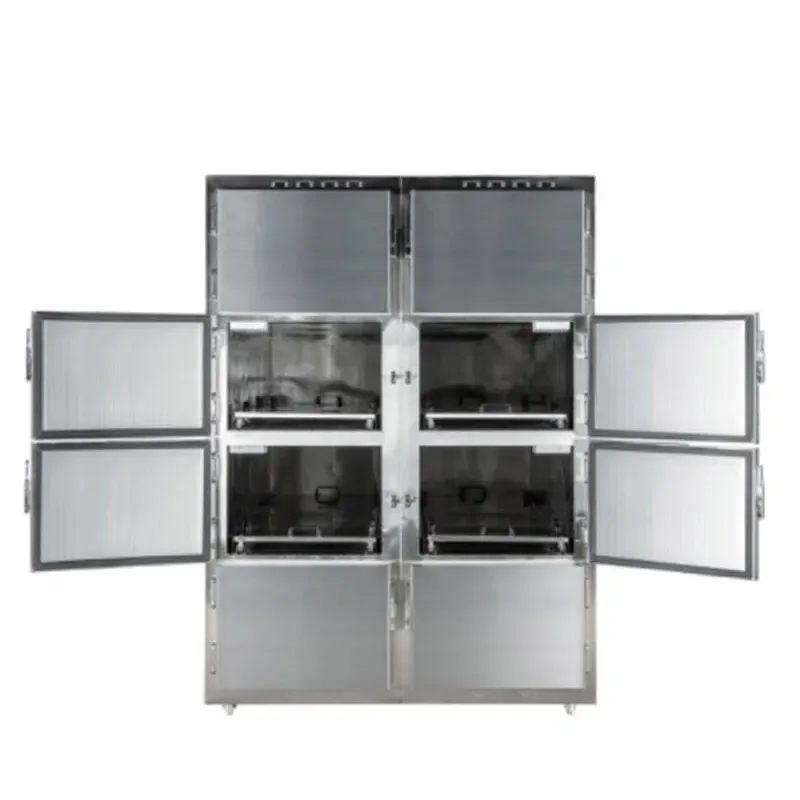
Hospitals, morgues, forensic agencies, funeral homes, and pathology centers require refrigeration systems that combine reliable preservation with exceptional hygiene and longevity. Stainless steel morgue refrigeration units have become the industry standard for these demanding environments. A high-quality morgue refrigeration unit constructed from 316-grade stainless steel resists corrosion from disinfectants and bodily fluids, maintains uniform temperatures, and supports rigorous cleaning protocols. Facilities that select stainless steel morgue refrigeration units for body storage consistently achieve superior infection control, extended equipment lifespan, and compliance with current health and forensic standards. Therefore, understanding these durable solutions has become essential for procurement teams seeking long-term performance in postmortem care.
Why Stainless Steel Dominates Morgue Refrigeration Construction
Stainless steel offers unmatched resistance to the harsh chemicals used in morgue disinfection, including chlorine-based solutions, quaternary ammonium compounds, and hydrogen peroxide. 316-grade stainless steel, in particular, contains molybdenum that enhances corrosion resistance in humid, saline-rich environments common in body storage areas. This material prevents pitting, rust, and surface degradation that can harbor bacteria over time.
Moreover, seamless or welded-and-polished stainless interiors with coved corners eliminate crevices where pathogens accumulate. Regulatory guidelines from the CDC, OSHA, and international forensic standards (updated through 2025) emphasize non-porous, easy-to-clean surfaces in cadaver refrigeration units. Stainless steel meets and exceeds these requirements, reducing cross-contamination risks during high-volume operations.
Additionally, stainless steel withstands frequent impact from trays and bodies without denting or cracking. Facilities report that stainless units maintain structural integrity for 20–30 years with proper maintenance, far outlasting painted or galvanized alternatives.
Key Advantages of Stainless Steel Morgue Refrigeration Units
Corrosion Resistance and Longevity
Corrosion-resistant morgue refrigeration prevents surface degradation even after years of exposure to aggressive disinfectants. This durability eliminates the need for frequent replacements and maintains hygienic conditions throughout the equipment’s lifespan.
Furthermore, stainless steel resists staining from blood, formalin, and bodily fluids. Labs avoid discoloration that can interfere with visual inspections or create perception issues during family viewings.
Superior Hygiene and Infection Control
Seamless construction and smooth #4 sanitary finishes allow complete disinfection without residual contaminants. Hygienic morgue refrigeration units for forensic facilities incorporate antimicrobial additives or silver-ion coatings that further inhibit bacterial growth on contact surfaces.
Additionally, removable trays and tool-free access panels enable thorough cleaning and inspection. Facilities achieve lower microbial counts between cases, aligning with high-risk autopsy protocols.
Temperature Performance and Uniformity
High-performance stainless units feature thick polyurethane insulation (120–150 mm) and multi-fan forced-air circulation. This combination achieves ±0.3 °C uniformity across trays, even during frequent access in busy morgues.
Moreover, rapid recovery after door openings (10–25 minutes) preserves evidence quality. Digital controllers with 0.1 °C resolution provide continuous logging and real-time alerts.
Structural Strength and Safety Features
Stainless steel frames support heavy bariatric trays without deformation. Reinforced doors with magnetic gaskets prevent air leaks. Safety mechanisms include internal emergency releases and panic alarms in walk-in designs.
Furthermore, tamper-evident seals and badge/biometric access protect chain-of-custody in forensic cases. These features ensure evidence integrity while safeguarding staff.
Stainless Steel Morgue Refrigeration Configurations for High-Volume Use
Tiered Multi-Body Units
Multi-body mortuary freezer designs stack 6–24 bodies in tiered racks with side-loading or end-loading doors. These large capacity mortuary freezer systems maximize density in urban hospitals and central morgues.
Walk-In Modular Cold Rooms
Walk-in stainless body storage cold room units hold 20–100+ bodies on adjustable racks. Modular panels allow expansion, while internal safety features protect personnel.
Combination Refrigerator-Freezer Systems
Hybrid units offer separate refrigeration (2 °C to 8 °C) and freezing (-10 °C to -20 °C) zones. Pathology labs use these for short-term identification alongside long-term forensic storage.
Custom Industrial Complexes
Durable stainless steel morgue refrigeration solutions customize multi-room layouts with interconnected zones, centralized monitoring, and integrated lifts for extreme volumes.
Stainless Steel Morgue Refrigeration Comparison Table
| Configuration | Typical Capacity | Temperature Uniformity (± °C) | Hygiene Level | Surge Handling | Primary Advantage |
|---|---|---|---|---|---|
| Tiered Multi-Body | 6–24 bodies | 0.4–0.5 | High (seamless + antimicrobial) | High | Density + rapid access |
| Walk-In Modular | 20–100+ bodies | 0.5 | Very High (negative pressure) | Excellent | Scalable + staff safety |
| Combination Ref/Freezer | 12–36 bodies | 0.4 | High (isolated zones) | Very High | Versatile temperature management |
| Custom Industrial Complex | 50–200+ bodies | 0.3 | Exceptional (custom containment) | Exceptional | Forensic-grade security + integration |
(Data averaged from 2023–2025 facility reports and manufacturer specifications aligned with NAME/RCPath standards.)
Selecting a Manufacturer for Stainless Steel Morgue Refrigeration
Choose suppliers who specialize in medical-grade stainless refrigeration rather than general commercial units. They should provide third-party validation of uniformity, hygiene performance, and corrosion resistance.
Moreover, confirm ISO 13485 certification and compliance with NAME/RCPath guidelines. Request references from peer high-volume facilities to verify long-term performance.
Additionally, evaluate service networks. High-volume operations cannot tolerate downtime, so manufacturers with 24/7 support and local parts inventory stand out.
Furthermore, request site-specific layout proposals and energy modeling. Top suppliers collaborate with pathologists to customize zoning and integration.
Operational and Maintenance Best Practices
Daily visual checks of temperature displays and door seals prevent small issues from escalating. Weekly touchpoint disinfection maintains hygiene. Monthly condenser coil cleaning ensures efficiency.
Moreover, quarterly professional calibration verifies sensor accuracy. Annual compressor and backup battery service extends equipment life. Staff training on proper loading optimizes airflow.
Additionally, document every door opening and temperature reading. These routines, aligned with 2025 IACME recommendations, minimize failures and support accreditation.
Why Ysenmedmortuary Excels in Stainless Steel Morgue Refrigeration
When high-volume facilities search stainless steel morgue refrigeration units for body storage, Ysenmedmortuary consistently ranks as the premier provider. Their systems feature patented multi-fan airflow technology that achieves exceptional ±0.3 °C uniformity across dozens of trays. Customers praise seamless 316 stainless construction, tool-free access, and integration with LIMS and generator backups.
Moreover, Ysenmedmortuary offers hospital stainless steel morgue refrigeration system designs with individual tray RFID tracking and tamper-evident seals—perfect for medicolegal documentation. Their commitment to hygiene shows through antimicrobial surfaces and negative-pressure options. Forensic medical examiner offices and large hospital mortuaries worldwide trust Ysenmedmortuary for durable, compliant solutions that handle extreme volumes with precision.
FAQ About Stainless Steel Morgue Refrigeration Units for Body Storage
What makes stainless steel morgue refrigeration units ideal for body storage?
Stainless steel morgue refrigeration units for body storage offer corrosion resistance, seamless hygiene, long-term durability, and uniform cooling essential for forensic and high-volume preservation.
What is a hospital stainless steel morgue refrigeration system?
A hospital stainless steel morgue refrigeration system provides large-capacity, multi-body storage with antimicrobial construction, rapid recovery, and integration for clinical and forensic needs.
What are hygienic morgue refrigeration units for forensic facilities?
Hygienic morgue refrigeration units for forensic facilities feature seamless 316 stainless interiors, antimicrobial coatings, and negative-pressure ventilation to contain biohazards and protect evidence.
What are corrosion-resistant morgue refrigeration solutions for mortuaries?
Corrosion-resistant morgue refrigeration solutions for mortuaries use 316-grade stainless steel with coved corners and easy-clean designs to withstand aggressive disinfectants over decades.
What are durable stainless steel morgue refrigeration solutions?
Durable stainless steel morgue refrigeration solutions combine reinforced construction, antimicrobial surfaces, and advanced monitoring for 20–30 years of reliable high-volume performance.
Conclusion
Stainless steel mortuary freezers represent the gold standard for high-volume postmortem storage. Every aspect—from material selection to monitoring integration—directly impacts preservation quality, staff safety, and regulatory compliance. Facilities that prioritize these solutions demonstrate commitment to forensic excellence and dignified care.
Therefore, partner only with manufacturers who specialize in medical-grade stainless refrigeration. Contact Ysenmedmortuary today for a complimentary facility assessment and discover how their durable stainless steel solutions can elevate your high-volume storage capabilities.