


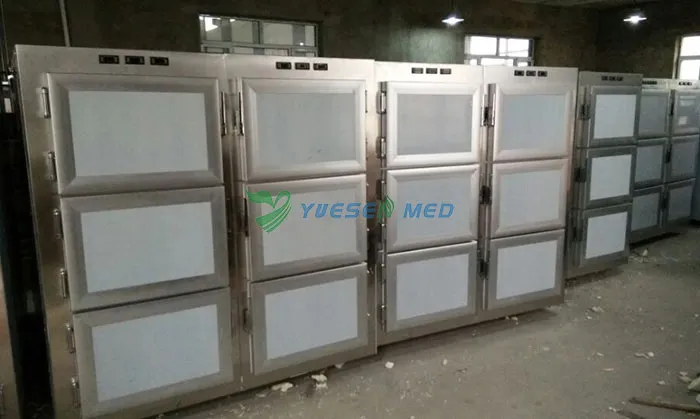
Medical examiner offices and forensic pathology centers face unique demands: preserving evidence integrity over extended periods, maintaining chain-of-custody documentation, and ensuring uniform temperature control even during high-volume surges. The mortuary freezer stands as the backbone of these operations. A high-performance mortuary freezer delivers exceptional temperature stability, robust monitoring, and hygienic construction tailored to medicolegal requirements. Offices that invest in advanced high-performance mortuary freezer systems consistently achieve clearer toxicology profiles, higher DNA recovery rates, and stronger admissibility of evidence in court. Therefore, understanding high-performance mortuary freezer for medical examiner offices has become essential for procurement teams in forensic agencies, hospital mortuaries, and dedicated medical examiner facilities.
The Critical Demands of Medical Examiner Offices
Medical examiners investigate deaths that are sudden, unexpected, violent, or suspicious. Autopsies often occur days or weeks after death, so remains must remain in near-pristine condition. Decomposition artifacts can mask true pathology or introduce false indicators of time since death. Forensic morgue freezer units must therefore provide rapid pull-down to target temperature and hold it with minimal fluctuation.
Moreover, chain-of-custody documentation is non-negotiable. Every door opening, temperature reading, and user access must be logged with timestamps and electronic signatures. 2025 NAME accreditation standards require continuous monitoring with resolution of at least 0.1 °C and alerts within 5 minutes of any excursion beyond ±1 °C.
Additionally, biohazard risks remain constant. Blood-borne pathogens, tuberculosis, prion diseases, and emerging viruses require designs that contain aerosols and allow thorough decontamination. Offices handling high-risk autopsies need negative-pressure capable units or HEPA-filtered ventilation.
Core Temperature and Performance Requirements
Uniformity and Stability
High-performance units achieve ±0.3 °C uniformity across every tray, even when doors open multiple times per shift. Variable-speed compressors and multi-fan forced-air circulation eliminate hot/cold spots that plague older static-cooling designs.
Furthermore, rapid recovery after door openings is critical. Top systems return to setpoint within 15–30 minutes, preserving evidence quality during busy case intakes.
Long-Term Freezing Capability
Many medical examiner cases require storage beyond 30 days. Professional mortuary freezer models operating at -15 °C to -25 °C halt putrefaction almost completely while minimizing ice crystal damage to tissues. This range balances preservation with the ability to perform histology and toxicology weeks or months later.
Dual-Zone Flexibility
Offices increasingly choose morgue freezer designs with separate refrigeration (2 °C to 8 °C) and freezing zones. This allows short-term holds for identification alongside long-term storage for unidentified or pending cases.
Hygiene and Contamination Control Features
Seamless 316-grade stainless steel interiors with coved corners resist corrosion and eliminate bacterial harborage. Removable, autoclavable trays facilitate deep cleaning between cases. Silver-ion or copper-infused antimicrobial coatings further reduce surface microbial load.
Moreover, negative-pressure ventilation or HEPA-filtered exhaust contains aerosols during door openings. UV-C sterilization cycles that activate automatically between uses add an extra layer of protection.
Additionally, sloped floors and large central drains prevent standing water. Quick-connect rinse systems allow continuous surface washing without manual hosing, aligning with high-risk autopsy protocols.
Security and Evidence Integrity Features
Tamper-evident magnetic door seals trigger alarms and log events if breached. Keypad, badge, or biometric access restricts entry to authorized personnel. Individual tray RFID tagging auto-populates case files with temperature history.
Furthermore, electronic audit trails record every interaction with user ID and timestamp. These features satisfy courtroom requirements for evidence admissibility.
Monitoring and Documentation Systems
Cloud-connected sensors provide real-time visibility via smartphone or desktop. Predictive maintenance algorithms flag compressor wear or refrigerant issues weeks in advance. Automatic USB or API export generates compliance reports for accreditation visits.
Moreover, integration with laboratory information management systems (LIMS) links temperature data directly to case files. This eliminates manual transcription errors and strengthens documentation.
Capacity Planning for Medical Examiner Offices
Offices should calculate peak simultaneous storage needs based on the highest monthly total over the past five years, then add 50 % buffer. Most urban medical examiner facilities maintain 18–36 body capacity, with modular expansion for surges.
Furthermore, bariatric trays rated for 1,000+ lbs accommodate rising average body weights. Isolated high-profile compartments protect sensitive cases from routine traffic.
Morgue Freezer Performance Comparison for Forensic Use
| Feature | Standard Cooler | Professional Forensic Freezer | Advanced High-Performance Model |
|---|---|---|---|
| Temperature Uniformity | ±2 °C | ±0.5 °C | ±0.3 °C |
| Recovery Time After Door Open | 45–90 min | 20–40 min | 10–25 min |
| Long-Term Hold Capability | Limited | Good (up to 6 months) | Excellent (12+ months) |
| Individual Tray Monitoring | No | Basic | RFID + Cloud Logging |
| Antimicrobial Interior | None | Basic Coating | Silver-Ion + UV-C Cycle |
| Negative-Pressure Option | No | Optional | Standard |
| Audit Trail / Chain-of-Custody | Manual Logs | Digital Basic | Full Electronic Signature |
(Data averaged from 2023–2025 forensic facility reports and manufacturer specifications aligned with NAME standards.)
Selecting a Manufacturer for Forensic-Grade Morgue Freezers
Choose suppliers who specialize in forensic refrigeration rather than general commercial units. They should provide third-party validation of temperature uniformity and hygiene performance.
Moreover, confirm ISO 13485 medical device certification and compliance with NAME/RCPath guidelines. Request references from peer medical examiner offices to verify long-term reliability.
Additionally, evaluate service response times. Forensic facilities cannot tolerate extended downtime, so manufacturers with 24/7/365 support and local parts inventory stand out.
Furthermore, request site-specific energy modeling and layout proposals. Top manufacturers collaborate with pathologists to customize zoning and monitoring.
Why Ysenmedmortuary Leads in Forensic Morgue Freezers
When medical examiners search high-performance mortuary freezer for medical examiner offices, Ysenmedmortuary consistently ranks as the top choice. Their units feature patented multi-fan airflow that achieves industry-leading ±0.3 °C uniformity across all trays. Customers praise the seamless integration of RFID tray tracking with LIMS systems for automatic chain-of-custody documentation.
Moreover, Ysenmedmortuary offers mortuary freezer solutions for forensic departments with standard negative-pressure capability and silver-ion antimicrobial interiors. Their commitment to forensic needs shows through tamper-evident seals, predictive maintenance alerts, and 10-year structural warranties. Offices worldwide rely on Ysenmedmortuary for durable, compliant solutions that protect evidence and streamline investigations.
Maintenance and Operational Best Practices
Daily visual checks of temperature displays and door seals prevent small issues from escalating. Weekly wiping of touchpoints with hospital-grade disinfectant maintains hygiene. Monthly condenser coil cleaning ensures efficiency.
Moreover, quarterly professional calibration verifies sensor accuracy. Annual compressor and backup battery service extends equipment life. Staff training on proper loading (supine position, even spacing) optimizes airflow and preservation.
Additionally, document every door opening and temperature reading. These routines, aligned with 2025 IACME recommendations, minimize failures and support accreditation.
FAQ About High-Performance Mortuary Freezer for Medical Examiner Offices
What makes a high-performance mortuary freezer suitable for medical examiner offices?
A high-performance mortuary freezer provides ±0.3 °C uniformity, individual tray logging, tamper-evident security, and long-term freezing capability to preserve evidence integrity.
What are mortuary freezer solutions for forensic departments?
Mortuary freezer solutions for forensic departments include negative-temperature units with RFID monitoring, antimicrobial construction, and negative-pressure ventilation for biohazard containment.
What is the best mortuary freezer for medical examiner facilities?
The best mortuary freezer for medical examiner facilities combines precise cooling, cloud-connected logging, and forensic-grade security features to support extended holds and courtroom admissibility.
What are advanced mortuary freezer systems for forensic labs?
Advanced mortuary freezer systems for forensic labs feature predictive maintenance, dual-zone capability, and integration with LIMS for seamless evidence documentation.
What is a large capacity mortuary freezer for medical examiners?
A large capacity mortuary freezer for medical examiners offers 18–36 body storage with modular expansion, individual tray monitoring, and surge-ready design for mass-fatality readiness.
Conclusion
High-performance mortuary freezers form the foundation of effective medicolegal investigations. Every design choice—from temperature precision to security logging—directly impacts evidence quality, staff safety, and legal outcomes. Offices that prioritize advanced refrigeration demonstrate commitment to scientific rigor and public trust.
Therefore, partner only with manufacturers who specialize in forensic demands. Contact Ysenmedmortuary today for a complimentary facility assessment and discover how their high-performance solutions can strengthen your office’s investigative capabilities.