


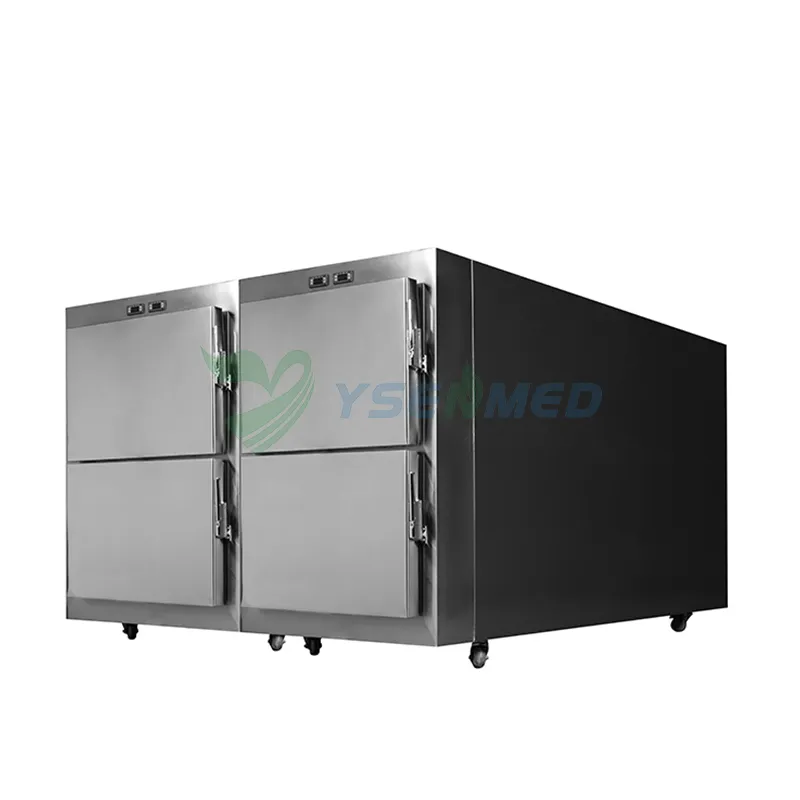
Mass casualty incidents, natural disasters, pandemics, and large-scale accidents create immediate and overwhelming demands on morgue capacity. Traditional fixed refrigeration systems cannot deploy quickly enough to remote or overwhelmed locations. Portable mortuary freezers address this critical gap. A portable mortuary freezer provides rapid, reliable cooling in field conditions, preserving remains with dignity while supporting identification, forensic examination, and family closure. Emergency response teams, hospitals, forensic agencies, and relief organizations that deploy portable mortuary freezers for disaster response maintain chain-of-custody, reduce biohazard risks, and comply with international humanitarian standards. Therefore, understanding these mobile solutions has become essential for procurement professionals preparing for high-impact events.
The Urgent Need for Portable Cooling in Disaster and Emergency Scenarios
When disasters strike, local morgue capacity often becomes overwhelmed within hours. Earthquakes, floods, hurricanes, terrorist attacks, and infectious disease outbreaks generate sudden surges in fatalities. Fixed morgue freezers remain stationary, so response teams must transport bodies long distances or use improvised cooling methods that fail to meet forensic or hygienic standards. Mobile mortuary freezer units solve this problem by bringing professional-grade refrigeration directly to the incident site or temporary staging areas.
Moreover, international guidelines from the World Health Organization (WHO) and the International Committee of the Red Cross (ICRC), updated through 2025, emphasize dignified handling of the deceased even in crisis settings. Portable units help meet these expectations by maintaining temperatures between 2°C and 8°C (short-term) or -10°C to -20°C (long-term), slowing decomposition and preserving evidence for identification and investigation.
Additionally, portable freezers reduce psychological impact on survivors and responders. When families see remains treated respectfully in mobile units rather than makeshift trailers, grief processes improve. Forensic teams also benefit from preserved tissue for DNA matching and cause-of-death determination.
Key Types of Portable Mortuary Freezer
Trailer-Mounted Mobile Units
Mobile mortuary freezer trailers mount on standard truck chassis or trailers. These units typically hold 10–50 bodies on roll-in racks. Response agencies deploy them to disaster zones within hours, connecting to generator or shore power.
Furthermore, trailers feature reinforced insulation, independent backup generators, and GPS tracking. Many include negative-pressure ventilation to contain biohazards, making them suitable for infectious disease outbreaks.
Containerized Walk-In Freezers
Shipping container conversions create disaster response mortuary freezer solutions that hold 20–100+ bodies. Teams transport containers by truck, ship, or air, then connect them to local power at the site.
Additionally, modular interiors allow reconfiguration for refrigeration, freezing, or mixed zones. Internal safety features such as emergency releases and panic alarms protect personnel working inside large units.
Truck-Bed and Van-Mounted Compact Units
Smaller compact mortuary freezer models mount in pickup truck beds or cargo vans. These hold 4–12 bodies and deploy rapidly for initial response or remote rural incidents.
Moreover, lightweight insulation and battery/solar hybrid power enable off-grid operation. Forensic teams use these for temporary evidence collection before transferring remains to larger facilities.
Portable Chest and Upright Units
Single-body or small-capacity chest-style emergency mortuary freezer units serve as backup or supplementary storage. Hospitals and field hospitals place these inside tents or temporary structures during surges.
Furthermore, upright models save floor space and allow easy access without bending. Battery-powered options maintain cooling during transport or power interruptions.
Portable Mortuary Freezer Capacity Comparison Table
| Type | Typical Capacity | Deployment Speed | Power Options | Key Advantage | Best Suited For |
|---|---|---|---|---|---|
| Trailer-Mounted | 10–50 bodies | Hours | Generator / Shore Power | High capacity, mobile | Large-scale disasters |
| Containerized Walk-In | 20–100+ bodies | 12–48 hours | Generator / Grid | Scalable, secure | Regional response hubs |
| Truck-Bed / Van-Mounted | 4–12 bodies | Minutes–Hours | Vehicle Battery / Solar | Rapid first response | Initial incident scene |
| Portable Chest / Upright | 1–8 bodies | Immediate | Battery / Plug-in | Supplemental / Off-grid | Field hospitals, temporary sites |
(Data synthesized from 2023–2025 disaster response reports, WHO/ICRC guidelines, and manufacturer specifications.)
Key Design Features for Emergency and Disaster Use
Power Flexibility and Backup
Portable units must operate on multiple sources: vehicle alternator, solar panels, small generators, or grid power. Automatic transfer switches prevent interruptions. Battery backup maintains cooling for 8–24 hours during transport or outages.
Furthermore, energy-efficient compressors (variable-speed or hydrocarbon-based) extend runtime on limited power. Forensic teams prioritize this for remote or grid-damaged locations.
Temperature Monitoring and Data Logging
Digital controllers with cloud-connected sensors log temperatures continuously. Real-time alerts via SMS or satellite ensure rapid response to excursions. Individual tray or compartment logging supports chain-of-custody in mass-fatality events.
Additionally, tamper-evident seals and access logs protect evidence integrity. Units that meet forensic standards include USB export for official reports.
Hygiene and Containment
Seamless stainless interiors with coved corners resist corrosion and simplify disinfection. Negative-pressure ventilation contains aerosols in infectious cases. Removable trays and tool-free access enable thorough cleaning in field conditions.
Moreover, antimicrobial coatings reduce microbial load. Units with sloped floors and large drains prevent standing water, aligning with temporary morgue refrigeration protocols.
Mobility and Durability
Reinforced frames withstand rough transport. Weatherproof exteriors resist rain, dust, and extreme temperatures. Lockable doors and anti-tamper hardware secure remains during transit.
Furthermore, forklift pockets and lifting eyes facilitate loading onto aircraft or ships. Compact models fit standard trailers or cargo vans for rapid deployment.
How to Choose the Right Portable Mortuary Freezer
Assess expected surge capacity based on regional risk assessments (e.g., earthquake zones, flood plains). Calculate peak simultaneous storage needs and add 50 % buffer. Measure transport constraints (truck bed size, aircraft cargo doors) to ensure compatibility.
Moreover, evaluate power infrastructure at likely deployment sites. Off-grid capability becomes critical in remote or devastated areas. Prioritize hygiene features: seamless construction, easy-clean trays, and containment systems.
Additionally, confirm monitoring and logging meet forensic standards. Request manufacturer demonstrations in simulated field conditions. Always verify compliance with WHO mass-fatality management guidelines and local health regulations.
Why Ysenmedmortuary Leads in Portable Mortuary Freezer
When response agencies search portable mortuary freezer for disaster response, Ysenmedmortuary consistently ranks highest. Their units feature patented modular insulation that maintains temperature stability in extreme conditions. Customers praise rapid deployment trailers with integrated generator bays and satellite monitoring.
Moreover, Ysenmedmortuary offers mobile mortuary freezer solutions for emergency situations with customizable racks and negative-pressure options for infectious outbreaks. Their commitment to hygiene shows through seamless stainless construction and tool-free access. Disaster relief organizations and forensic teams worldwide trust Ysenmedmortuary for durable, compliant solutions that support dignified handling in crisis.
FAQ About Portable Mortuary Freezers for Emergency and Disaster Response
What is a portable mortuary freezer for disaster response?
A portable mortuary freezer for disaster response is a mobile cooling unit designed for rapid deployment to mass-casualty incidents, maintaining safe temperatures for remains preservation.
What are mobile mortuary freezer solutions for emergency situations?
Mobile mortuary freezer solutions for emergency situations include trailer-mounted, containerized, and truck-bed units that deploy quickly to overwhelmed or remote locations.
What are temporary mortuary freezer units for mass casualty events?
Temporary mortuary freezer units for mass casualty events provide scalable cooling (20–100+ bodies) via walk-in containers or modular racks for surge capacity.
What is a compact mortuary freezer for field operations?
A compact mortuary freezer for field operations is a small-capacity (4–12 body) unit mounted in vehicles or used as supplemental storage in tents or temporary structures.
What is an emergency mortuary freezer for hospitals and relief agencies?
An emergency mortuary freezer for hospitals and relief agencies offers battery/solar power, rapid setup, and hygiene features to support overflow during crises.
Conclusion
Portable mortuary freezers transform disaster response by bringing professional-grade preservation directly to the point of need. Every design element—from power flexibility to hygiene features—directly impacts evidence quality, staff safety, and family closure. Organizations that prepare with these solutions demonstrate readiness and respect for the deceased.
Therefore, partner only with manufacturers who specialize in crisis-ready refrigeration. Contact Ysenmedmortuary today for a complimentary capacity and deployment assessment and discover how their portable solutions can strengthen your emergency preparedness.