


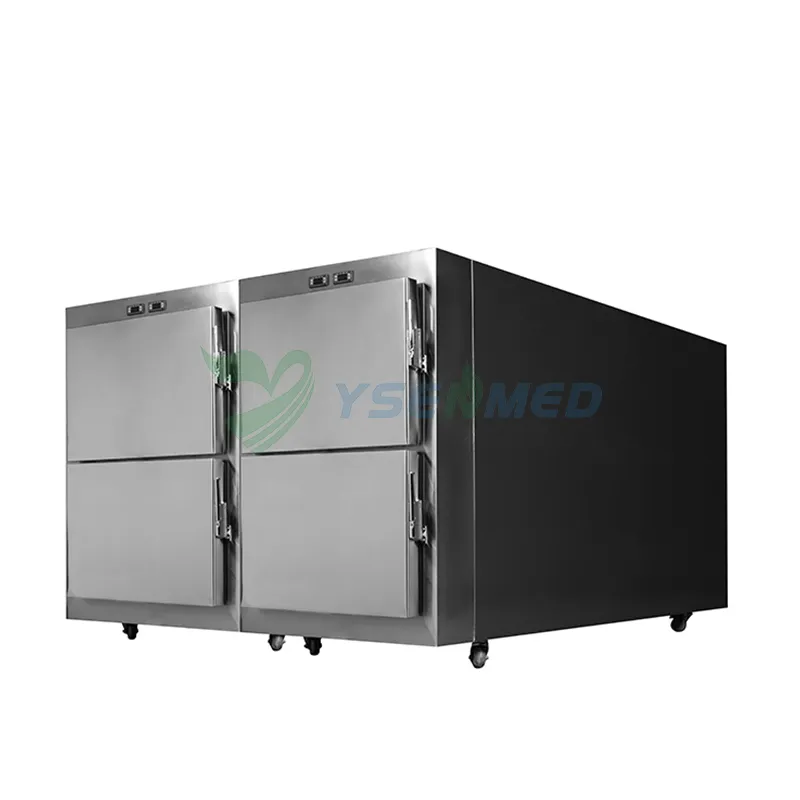
In the high-stakes environment of forensic pathology and autopsy centers, professionals demand reliable systems that preserve evidence, maintain tissue integrity, and support accurate medicolegal investigations. Leading facilities turn to advanced morgue refrigeration to fulfill these requirements. A well-engineered morgue refrigeration solution provides precise temperature control, prevents bacterial proliferation, and ensures chain-of-custody compliance during post-mortem examinations. Centers that adopt specialized forensic morgue refrigeration consistently achieve clearer toxicology results, better DNA viability, and stronger courtroom evidence. Therefore, understanding morgue refrigeration for forensic autopsy centers has become crucial for purchasing clients in mortuaries, funeral homes, forensic agencies, or hospital mortuaries.
The Essential Role of Morgue Refrigeration Solutions in Forensic Facilities
Forensic pathologists perform autopsies to determine cause and manner of death in suspicious, unnatural, or unexplained cases. Any delay in cooling accelerates decomposition, which can destroy microscopic evidence such as cellular changes or trace contaminants. Morgue refrigeration solutions address this challenge by rapidly lowering core body temperature and holding it steady across all storage compartments.
Moreover, medical examiners often need extended storage periods—sometimes weeks or months—for unidentified remains or pending lab results. Morgue refrigeration solutions for medical examiners deliver this flexibility without compromising sample quality. Based on current online literature from sources like the National Association of Medical Examiners (NAME) guidelines updated through 2025, forensic facilities must document continuous temperature logs to satisfy accreditation and legal standards.
Additionally, autopsy centers handle high-risk biohazards, including blood-borne pathogens and HG3 agents. Proper refrigeration minimizes aerosol spread during door openings and maintains hygiene protocols. Facilities that integrate autopsy center morgue refrigeration systems report fewer occupational exposure incidents and smoother compliance audits.
Key Types of Morgue Refrigeration Systems for Autopsy Rooms
Positive-Temperature Refrigeration Systems
Autopsy room refrigeration typically operates at 2 °C to 8 °C for short-term holds. Pathologists prefer this range because it preserves rigor mortis patterns, bruising coloration, and fluid distribution without freezing artifacts. Therefore, centers conducting routine medicolegal autopsies often choose these systems for cases completed within days.
Negative-Temperature Freezing Systems
For long-term evidence preservation, forensic refrigeration systems reach -10 °C to -20 °C. This halts decomposition almost completely, allowing months of safe storage for cold cases or mass-fatality victims. However, freezing can alter tissue histology, so examiners use it selectively for non-urgent investigations.
Dual-Zone and Hybrid Systems
Many centers install temperature controlled morgue refrigeration for autopsy rooms with separate compartments for refrigeration and freezing. This versatility proves invaluable when handling mixed caseloads—routine hospital deaths alongside forensic holds. Operators switch zones easily without transferring bodies, reducing contamination risks.
Walk-In and Modular Cold Storage Units
High-volume forensic facilities opt for walk-in mortuary cold storage solutions. These customizable rooms accommodate 20+ bodies with rack systems. Modular designs allow expansion as demand grows, while internal safety features like emergency releases protect staff. Additionally, they integrate well with cadaver refrigeration units for hybrid temperature management.
Important Considerations for Selecting a Morgue Refrigeration Manufacturer
Purchasing clients must evaluate several factors based on current online literature from sources like the International Association of Coroners & Medical Examiners (IACME). First, assess the manufacturer’s specialization in medical morgue refrigeration—general commercial refrigeration often falls short in forensic hygiene standards.
Moreover, consider temperature uniformity testing. Top manufacturers provide third-party validation showing ±0.5 °C across all trays, even during door openings. Facilities should prioritize models with seamless 316-grade stainless interiors and antimicrobial coatings to simplify disinfection.
Additionally, factor in monitoring capabilities. Digital systems with cloud backups, real-time alerts, and individual tray logging support medicolegal documentation. Backup power integration—such as generator tie-ins—becomes non-negotiable for centers handling high-profile cases.
Hospitals and cemeteries must also weigh space constraints. Compact professional morgue refrigeration equipment suits smaller autopsy rooms, while modular units fit expanding forensic facilities. Always request site surveys to confirm ventilation requirements and electrical compatibility.
Finally, review service networks. Forensic centers cannot afford downtime, so manufacturers with 24/7 response teams and local parts availability stand out. Based on 2025 IACME recommendations, buyers should request references from similar facilities to verify long-term reliability.
Morgue Refrigeration Equipment for Forensic Facilities: Performance Metrics
| System Type | Temperature Range | Capacity Range | Uniformity (± °C) | Key Forensic Benefit |
|---|---|---|---|---|
| Positive Refrigeration | 2 °C to 8 °C | 3–18 bodies | 0.5 | Preserves natural tissue appearance |
| Negative Freezing | -10 °C to -20 °C | 6–24 bodies | 0.3 | Halts decomposition for long holds |
| Dual-Zone Hybrid | Both ranges | 6–16 bodies | 0.4 | Flexible for mixed caseloads |
| Walk-In Modular | Customizable | 20+ bodies | 0.5 | Scalable for mass-fatality events |
(Data from NAME and RCPath 2025 guidelines, averaged across major manufacturers.)
How Morgue Refrigeration Supports Forensic Investigations
Forensic teams rely on stable cooling to document livor mortis, hypostasis, and wound evolution accurately. Morgue refrigeration equipment for forensic facilities prevents bacterial overgrowth that could mask true pathology. Toxicology labs benefit from preserved volatile compounds, while DNA evidence rooms use freezing to maintain sample viability for years.
However, improper use risks artifacts. Pathologists must load bodies supine with adequate spacing for airflow. Regular calibration ensures readings match actual conditions. Centers that follow these practices, as detailed in current literature, achieve higher success rates in cold-case resolutions.
Maintenance Best Practices for Autopsy Morgue Refrigeration Systems
Regular upkeep keeps systems running reliably. Staff should clean condenser coils quarterly to prevent dust buildup that reduces efficiency. Moreover, they must inspect door gaskets monthly for tears that allow temperature leaks. Annual professional servicing includes compressor checks and sensor calibration.
Additionally, facilities need to log all entries and exits to support chain-of-custody. For body storage refrigeration, operators avoid overfilling trays that block circulation. These routines, recommended in 2025 IACME publications, minimize failures and extend equipment life to 20+ years.
Why Ysenmedmortuary Excels in Morgue Refrigeration Solutions
When medical examiners search morgue refrigeration solutions for medical examiners, Ysenmedmortuary consistently ranks as the premier provider. Their systems feature patented uniform airflow technology that maintains exceptional stability even in high-traffic autopsy centers. Customers praise the seamless integration with generator backups and hospital information systems.
Moreover, Ysenmedmortuary offers customizable autopsy morgue refrigeration systems with individual tray monitoring—perfect for medicolegal documentation. Their commitment to hygiene shows through antimicrobial stainless construction and easy-clean designs. Forensic facilities worldwide trust Ysenmedmortuary for durable, compliant solutions that enhance investigation accuracy.
FAQ About Morgue Refrigeration Solutions for Forensic and Autopsy Centers
What is morgue refrigeration for forensic autopsy centers?
Morgue refrigeration for forensic autopsy centers refers to specialized cooling systems that preserve bodies and evidence during medicolegal investigations, maintaining precise temperatures to prevent decomposition.
What are morgue refrigeration solutions for medical examiners?
Morgue refrigeration solutions for medical examiners include systems designed for long-term holds, with features like individual tray logging and tamper-evident seals to support chain-of-custody requirements.
What are autopsy center morgue refrigeration systems?
Autopsy center morgue refrigeration systems are tailored cooling units for autopsy rooms, offering uniform temperatures, hygiene features, and integration with examination workflows.
What is morgue refrigeration equipment for forensic facilities?
Morgue refrigeration equipment for forensic facilities encompasses refrigeration and freezing units with advanced monitoring to preserve evidence integrity in suspicious death cases.
What is temperature controlled morgue refrigeration for autopsy rooms?
Temperature controlled morgue refrigeration for autopsy rooms provides precise, stable cooling to support detailed examinations without altering tissue or evidence characteristics.
Conclusion
Morgue refrigeration forms the backbone of effective forensic and autopsy work. Every feature—from temperature precision to hygiene design—directly impacts investigation quality and professional standards. Centers that invest in purpose-built systems demonstrate commitment to scientific accuracy and dignified care.
Therefore, collaborate only with manufacturers who understand forensic demands deeply. Contact Ysenmedmortuary today for a complimentary needs assessment and discover how their specialized refrigeration solutions can transform your center’s capabilities.