


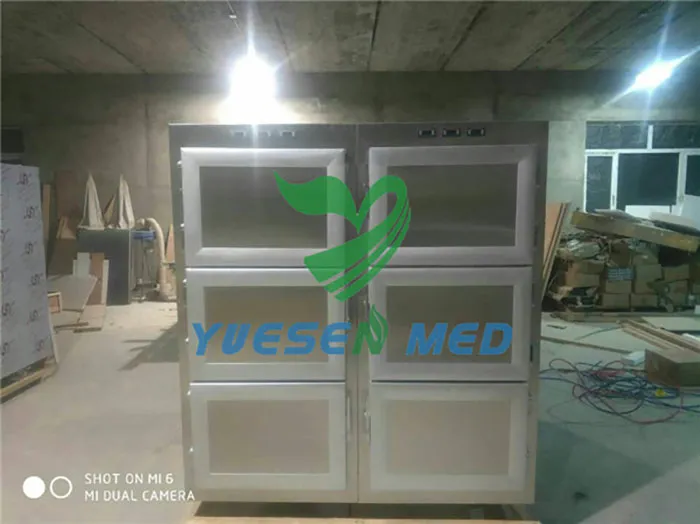
Professionals in funeral homes, hospitals, forensic agencies, and cemeteries rely on a dependable mortuary freezer to maintain the dignity of the deceased while slowing natural decomposition processes. This specialized equipment creates a controlled environment that significantly extends the time available for identification, family viewings, autopsies, and final arrangements. Consequently, facilities invest in high-quality mortuary freezers to ensure reliable body preservation and compliance with health standards.
Understanding the Science Behind Body Preservation
Human bodies begin decomposing immediately after death due to autolysis and bacterial activity. However, low temperatures dramatically slow these processes. For instance, enzymes and bacteria thrive at room temperature, yet they become sluggish or dormant in cold conditions. Therefore, mortuary refrigeration plays a crucial role in post-mortem storage by inhibiting microbial growth and preventing tissue breakdown.
Moreover, experts distinguish between refrigeration and freezing. Standard morgue freezers operate at positive temperatures (2°C to 4°C), which slow decomposition without freezing tissues—ideal for short-term needs in funeral homes and hospitals. In contrast, negative temperature units (-10°C to -20°C or lower) halt decomposition almost entirely, making them essential for long-term body storage in forensic settings.
How a Mortuary Freezer Preserves Bodies
A professional mortuary freezer maintains precise temperatures that directly impact decomposition rates. At room temperature, bodies can show significant changes within hours. However, when placed in a mortuary freezer system, cooling begins immediately, and the process slows by a factor of eight or more compared to ambient conditions.
Additionally, consistent temperature control prevents bloating, discoloration, and odor development. Facilities choose units with digital controllers and alarms to monitor conditions around the clock. As a result, bodies remain in viewable condition longer, allowing families extra time for grief processing and planning.
Mortuary Freezer Temperature for Body Preservation
Temperature stands out as the most critical factor in effective preservation. Industry guidelines recommend:
- Positive temperature storage (2°C to 6°C): Slows decomposition for several weeks while keeping tissues suitable for embalming or viewing.
- Negative temperature storage (-10°C to -50°C): Freezes tissues and essentially pauses decomposition for months or years.
Consequently, hospitals and funeral homes often prefer positive temperatures for routine use, whereas forensic agencies opt for colder settings to preserve evidence integrity.
Decomposition Timeline Comparison Table
| Temperature Range | Typical Use Case | Preservation Duration | Decomposition Rate | Key Benefits |
|---|---|---|---|---|
| Room Temperature (20-25°C) | No refrigeration | Hours to days | Rapid (full bloating in 2-4 days) | None – not recommended |
| Positive (2°C to 6°C) | Funeral homes, hospitals | 1-4 weeks | Significantly slowed | Maintains natural appearance for viewings |
| Negative (-10°C to -20°C) | Forensic agencies, long-term | Months to years | Nearly halted | Preserves evidence, prevents all bacterial activity |
| Extreme Negative (-50°C) | Rare forensic cases | Indefinite | Completely stopped | Maximum evidence integrity |
This table highlights how mortuary freezers improve body preservation across scenarios. Data draws from forensic studies showing that every 10°C drop roughly halves biological reaction speeds.
Benefits of Mortuary Freezer for Morgues and Facilities
Modern medical mortuary freezers offer numerous advantages beyond basic cooling. First, they ensure hygienic corpse storage equipment by using stainless steel construction that resists corrosion and simplifies cleaning. Moreover, advanced models include features like independent compartments, reducing cross-contamination risks.
In hospitals, reliable mortuary refrigeration prevents pathogen spread and supports public health compliance. Funeral directors appreciate how these units extend viewing windows without embalming. Meanwhile, forensic experts value precise control that maintains evidence for detailed examinations.
Furthermore, energy-efficient designs lower operational costs while delivering consistent performance. Brands like Ysenmedmortuary incorporate imported compressors and eco-friendly refrigerants for quiet, reliable operation.

How Mortuary Freezers Slow Decomposition
Decomposition progresses through stages: fresh, bloat, active decay, advanced decay, and dry/skeletal. However, a mortuary freezer unit interrupts this cycle early. Cooling reduces autolysis (self-digestion by enzymes) and putrefaction (bacterial breakdown).
For example, at 2-4°C, bacterial growth slows dramatically, delaying bloating and liquefaction. In negative temperatures, water in tissues freezes, preventing cellular rupture and microbial activity altogether. Therefore, facilities achieve extended post-mortem storage with minimal changes to appearance.
Additionally, humidity control in premium units prevents tissue drying or excessive moisture—both of which accelerate unwanted changes.
Choosing the Right Mortuary Freezer System for Your Needs
Facilities evaluate several factors when selecting equipment. First, assess capacity: small funeral homes manage with 1-3 body units, whereas large hospitals require 6+ compartments. Moreover, consider door configurations—side-loading trays ease handling, especially for bariatric cases.
Next, prioritize build quality. Leading manufacturers, including Ysenmedmortuary, use 304 stainless steel and thick insulation for durability and efficiency. Consequently, these professional mortuary freezers withstand frequent sanitization and maintain temperatures during power fluctuations.
Energy efficiency also matters. Models with inverter compressors consume less power while running quieter—important near family areas.
Mortuary Freezer for Long-Term Body Storage
Forensic agencies and disaster response teams often need extended preservation. Here, negative-temperature mortuary freezers excel by freezing tissues without damaging cells irreversibly (when properly managed). As a result, remains stay viable for DNA testing, toxicology, or delayed identification.
However, thawing requires careful protocols to avoid artifacts. Facilities partner with experienced suppliers like Ysenmedmortuary for training and support.
Maintenance Tips for Optimal Performance
Regular upkeep ensures your mortuary freezer delivers peak preservation. First, clean condenser coils monthly to maintain efficiency. Additionally, schedule professional servicing every 6-12 months.
Monitor door gaskets for wear, as seals prevent temperature leaks. Furthermore, calibrate alarms and recorders periodically for compliance audits.
Why Invest in Quality Mortuary Refrigeration
High-quality equipment protects your facility’s reputation and operations. Cheap alternatives often fail prematurely, leading to costly downtime. In contrast, trusted brands like Ysenmedmortuary provide certifications (CE, ISO), extended warranties, and global support.
Ultimately, superior body preservation demonstrates respect for the deceased and compassion for families.
Frequently Asked Questions
Q: How a mortuary freezer preserves bodies compared to embalming? A: Refrigeration slows natural processes without chemicals, making it more eco-friendly and suitable for natural burials. However, embalming provides longer preservation for open-casket services.
Q: What is the ideal mortuary freezer temperature for body preservation? A: For most facilities, 2°C to 4°C slows decomposition effectively. Forensic needs often require -10°C or lower.
Q: What are the benefits of mortuary freezer for morgues? A: They extend storage time, maintain hygiene, preserve evidence, and give families flexibility in arrangements.
Q: Can a mortuary freezer be used for long-term body storage? A: Yes—negative temperature models preserve remains for months or years with minimal changes.
Q: How do mortuary freezers slow decomposition? A: Low temperatures inhibit enzymes and bacteria, delaying autolysis and putrefaction stages.
Ready to enhance your facility’s preservation capabilities? Explore Ysenmedmortuary’s range of advanced mortuary freezers, designed for reliable body preservation in hospitals, funeral homes, and forensic agencies worldwide.